

Views: 1
FISH-003 | FISHES WEBSITE CONTENT | MARINE LIFE
Clownfish: Life Among Sea Anemones


12
Meet the colorful little fish that lives safely among deadly stinging tentacles. Clownfish are among the ocean’s most recognizable residents, famous for their bright colors, unusual family structure, and remarkable partnership with sea anemones.
1. Quick facts
| Feature | Details |
|---|---|
| Common name | Clownfish / Anemonefish |
| Scientific group | Amphiprioninae |
| Example species | Amphiprion ocellaris |
| Family | Pomacentridae |
| Species | More than 30 |
| Typical size | Around 7–15 cm, depending on species |
| Lifespan | Approximately 6–10 years in the wild |
| Diet | Omnivorous |
| Habitat | Coral reefs and shallow lagoons |
| Distribution | Indian and Pacific Oceans, including the Red Sea |
| Famous feature | Symbiosis with sea anemones |
Reference: Ocean Conservancy and U.S. Geological Survey.
Ocean Conservancy
+1
2. A home among stinging tentacles
Imagine living inside a creature covered in stinging cells powerful enough to capture small animals. For most fish, a sea anemone is dangerous. For clownfish, it is home.
Sea anemones belong to the same broad animal group as jellyfish and corals. Their tentacles contain specialized stinging structures called nematocysts.
Clownfish can live among these tentacles thanks in part to the chemistry of their protective mucus coating and their adaptation to the host anemone. Scientists continue to investigate exactly how this protection works.
Smithsonian Ocean
+1
3. The perfect partnership

What the clownfish receives
A protected shelter, a safe place for its family, and access to food scraps.

What the anemone receives
Protection against some predators, cleaning activity, and nutrients contributed by fish waste.
This relationship is called mutualism, meaning both organisms benefit.
The Florida Aquarium
+1
4. The extraordinary family structure
One of the most surprising facts about clownfish is their ability to change sex.
A clownfish group generally includes a dominant breeding female, a breeding male, and smaller subordinate individuals. If the female disappears, the breeding male can become female, and another individual may develop into the breeding male.
This process is called protandrous sequential hermaphroditism. It helps maintain reproduction within the group.
Species Profile
5. What do clownfish eat?
Clownfish are omnivores. Their natural diet can include zooplankton, tiny crustaceans, algae, and other small organisms drifting through the water.
They usually remain close to their home anemone, although their movements vary by species and circumstances.
6. Reproduction and parenting
Clownfish lay adhesive eggs on a hard surface near their host anemone. The male typically guards the eggs, cleans them, and fans them with his fins to help maintain water circulation.
Once the eggs hatch, the larvae spend an initial period drifting in the open water before eventually settling into suitable reef habitats.
7. Threats and conservation
Clownfish face threats connected to the health of tropical marine ecosystems. Warming seas, coral reef degradation, anemone bleaching, and changes in ocean chemistry can affect their habitats and survival.
Protecting reefs and sea anemones is essential to protecting the fish that depend on them.
Ocean Conservancy
8. Five fascinating clownfish facts
- Clownfish can change from male to female.
- They use popping and clicking sounds for communication.
- Their host anemone protects them from many predators.
- Different clownfish species have different color patterns.
- Only a small fraction of sea anemone species are suitable clownfish hosts.
9. Photo and video resources for publication
The following media links are suitable for your publisher to review and import, subject to the licenses on their source pages.

Featured photograph
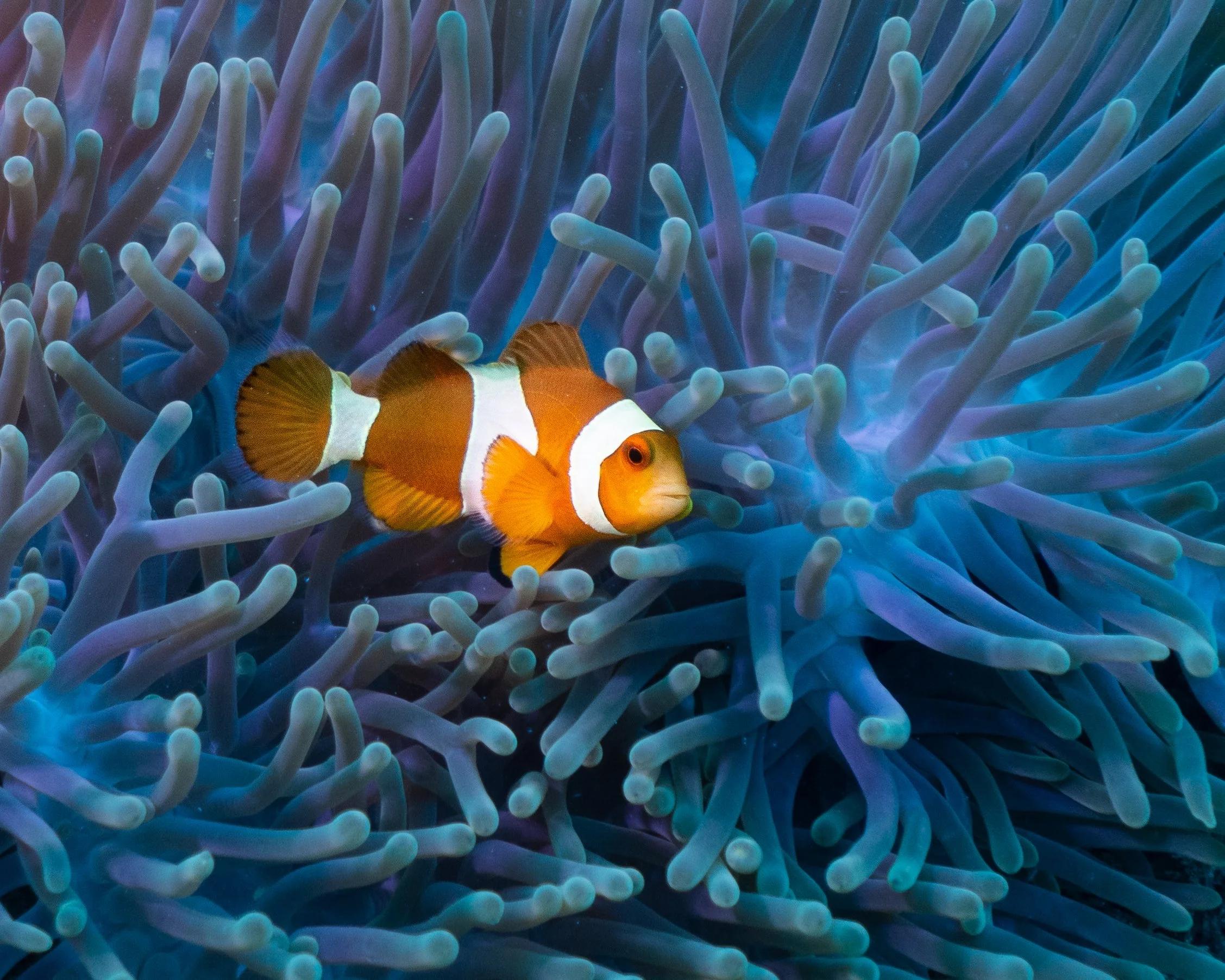
Clownfish inside a magnificent sea anemone, Great Barrier Reef.


Supplementary photograph
Clownfish and anemone; CC BY-SA 4.0, attribution required.

Underwater footage
Clownfish and Sea Anemone
Pexels • 4K • 24 seconds • Landscape
View video
School of Clownfish Among Anemones
Pexels • 11 seconds • Vertical 9:16
View video
10. WordPress SEO and publishing package
| Field | Recommended content |
|---|---|
| Content ID | FISH-003 |
| Post title | Clownfish: Life Among Sea Anemones |
| SEO title | Clownfish Facts: Life Among Sea Anemones |
| Slug | clownfish-life-among-sea-anemones |
| Focus keyword | Clownfish |
| Secondary keywords | Clownfish facts, sea anemone, anemonefish, marine life, ocean animals |
| Category | Marine Fish |
| Tags | Clownfish, Coral Reef, Sea Anemones, Tropical Fish, Marine Biology |
| Status | Ready for editorial review |
| Featured image alt text | Orange clownfish sheltering among the tentacles of a sea anemone |
Meta description
Discover how clownfish survive among stinging sea anemones, communicate, reproduce, change sex, and protect their underwater homes.
Suggested social caption
🐠 How can a tiny fish live safely among stinging sea anemones?
Meet the incredible clownfish! Discover its extraordinary partnership with sea anemones, surprising family structure, and fascinating underwater life.
🌊 Explore the wonders of marine nature.
#Clownfish #SeaAnemone #MarineLife #OceanFacts #UnderwaterWorld #CoralReef
11. Scientific references
For editorial fact-checking:
- Ocean Conservancy — Clownfish
- The Florida Aquarium — Clownfish
- Smithsonian Ocean — Clownfish and Host Anemones
- USGS — Amphiprion ocellaris Species Profile
Package status: Article drafted and researched, with media sources and SEO metadata identified. Images and videos have not yet been imported into WordPress, and the article has not been published.