
Views: 10
Meet the Giant of the Coral Reef
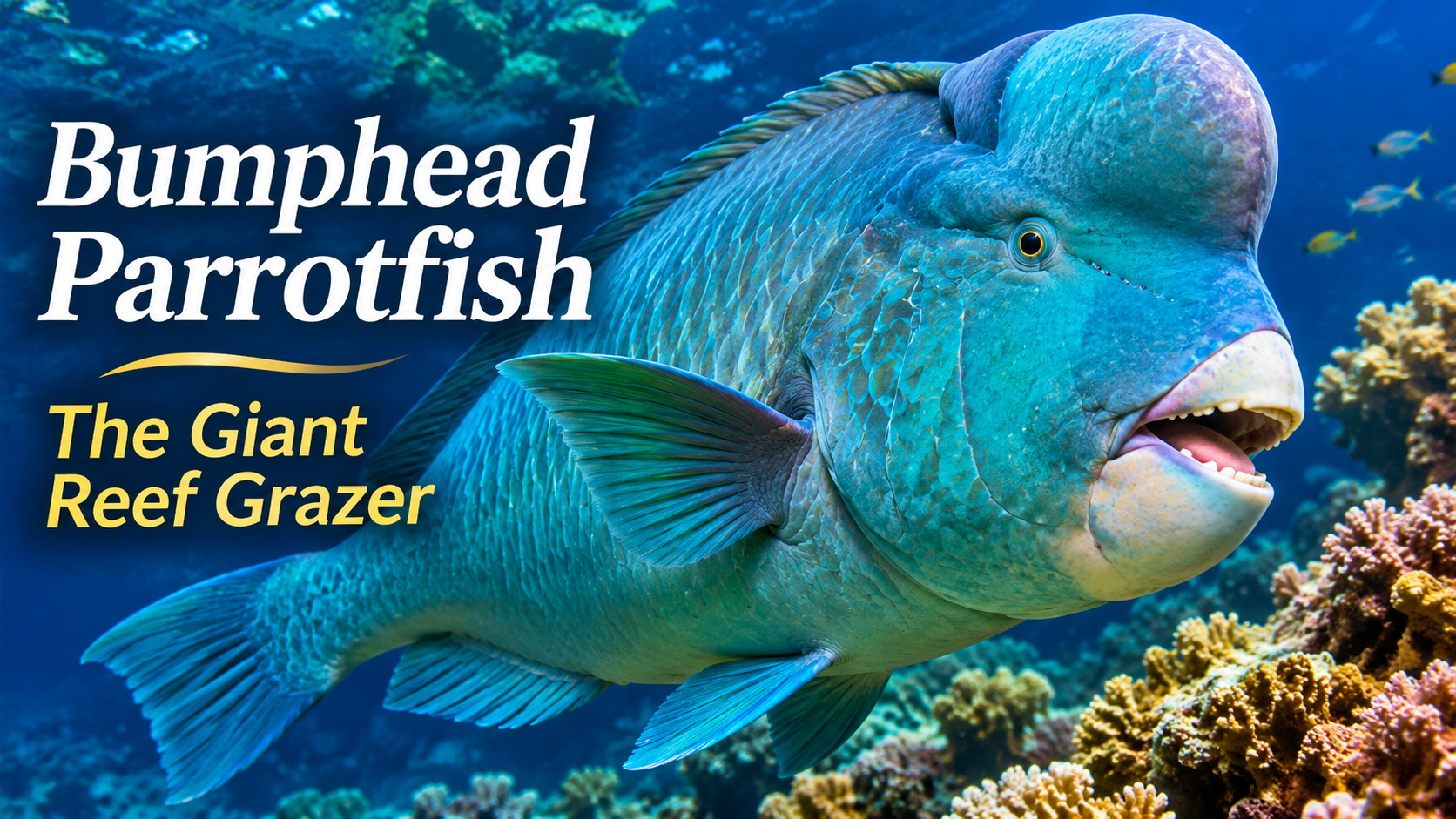
The bumphead parrotfish (Bolbometopon muricatum) is one of the most extraordinary inhabitants of tropical coral reefs. With its massive blue-green body, distinctive rounded forehead and powerful jaws, this fish can look almost prehistoric.
As the largest living species of parrotfish, it plays an important role in reef ecosystems. Its feeding activities help break down coral skeletons, redistribute reef material and create sediment.
Size and Unique Physical Features
Exceptional bumphead parrotfish can reach approximately 1.5 metres in length and exceed 75 kilograms in weight. Adults develop a prominent forehead hump and possess strong, fused dental plates that form a parrot-like beak.
The forehead and jaws help the fish feed on hard reef surfaces. Its colours range from grey-green to turquoise, often with lighter shades around the forehead.
Young bumphead parrotfish look different from adults. Juveniles are generally smaller, with less developed forehead humps and more noticeable body markings.
Where Do Bumphead Parrotfish Live?
This species inhabits tropical waters across the Red Sea and Indo-Pacific region, including East Africa, Indonesia, Papua New Guinea, Palau and Australia’s Great Barrier Reef.
Juveniles commonly occupy sheltered lagoons, while adults prefer clear outer lagoons, reef fronts and seaward coral reefs. They are generally found in relatively shallow waters where coral growth provides feeding opportunities.
What Do Bumphead Parrotfish Eat?
Unlike parrotfish species that primarily scrape algae from reef surfaces, bumphead parrotfish consume significant amounts of living coral as well as algae and other reef organisms.
Their powerful jaws bite and crush coral material, while their digestive system processes the organic food and hard skeletal fragments. Fine sediment is eventually expelled back into the marine environment.
This natural breakdown of hard reef material is called bioerosion. Although individual bites damage coral, the species has an important ecological role in the long-term movement and recycling of reef material.
How They Help Shape Coral Reefs
Bumphead parrotfish are major biological eroders of coral reefs. Their feeding can remove substantial quantities of calcium carbonate from reef surfaces.
The resulting sediment contributes to the movement and accumulation of sandy material around reef habitats. Their activities are therefore part of a complex balance between coral growth, erosion and sediment production.
Because these fish can significantly alter reef surfaces, changes in their population may affect the physical development and ecological functioning of coral reefs.
Social Behaviour and Sleeping Habits
Bumphead parrotfish often travel in groups or schools, sometimes gathering in considerable numbers. During the day, they move across reefs while searching for food.
At night, groups may rest in sheltered reef areas, caves and other protected locations. Their predictable resting behaviour unfortunately makes them vulnerable to nighttime fishing.
Researchers have also documented spawning aggregations in which adults gather to reproduce, demonstrating the importance of protecting habitats used during breeding.
Reproduction and Life Cycle
The bumphead parrotfish is a relatively slow-growing, long-lived reef fish. Its delayed maturation and comparatively low population-replacement capacity make recovery difficult when fishing pressure becomes excessive.
Like many marine reef fishes, it reproduces by releasing eggs into the water. Spawning events and the survival of young fish are essential to maintaining healthy populations.
Why Is the Bumphead Parrotfish Threatened?
The International Union for Conservation of Nature (IUCN) classifies the bumphead parrotfish as Vulnerable, with a decreasing global population trend.
Major threats include:
- Overfishing, particularly spearfishing and harvesting of groups.
- Damage and degradation of coral reef habitats.
- Climate change and ocean warming.
- Pollution and other coastal environmental pressures.
Its large size, social behaviour and predictable sleeping locations make the species especially susceptible to fishing pressure.
Protecting the Giant Reef Grazer
Protecting bumphead parrotfish requires effective fisheries management, healthy coral reef habitats and well-enforced marine protected areas. Safeguarding spawning and resting sites can also support local populations.
Responsible reef tourism and scientific monitoring help raise awareness of this remarkable species and the wider ecosystems on which it depends.
Conclusion
The bumphead parrotfish is much more than a spectacular giant of the underwater world. Its coral-crushing jaws, social behaviour and role in reef bioerosion make it a remarkable example of how marine animals influence their environment.
Protecting this Vulnerable species helps preserve an important ecological process and the biodiversity of tropical coral reefs.