
Views: 4
BIN3AIAH FISHES | MARINE LIFE & CONSERVATION
Lionfish: Beauty, Venom and Invasive Populations


10
Scientific names: Pterois volitans and Pterois miles Family: Scorpaenidae Native habitat: Indo-Pacific waters Diet: Carnivorous — small fish and crustaceans Conservation concern: Invasive populations in the western Atlantic, Caribbean and Gulf of Mexico
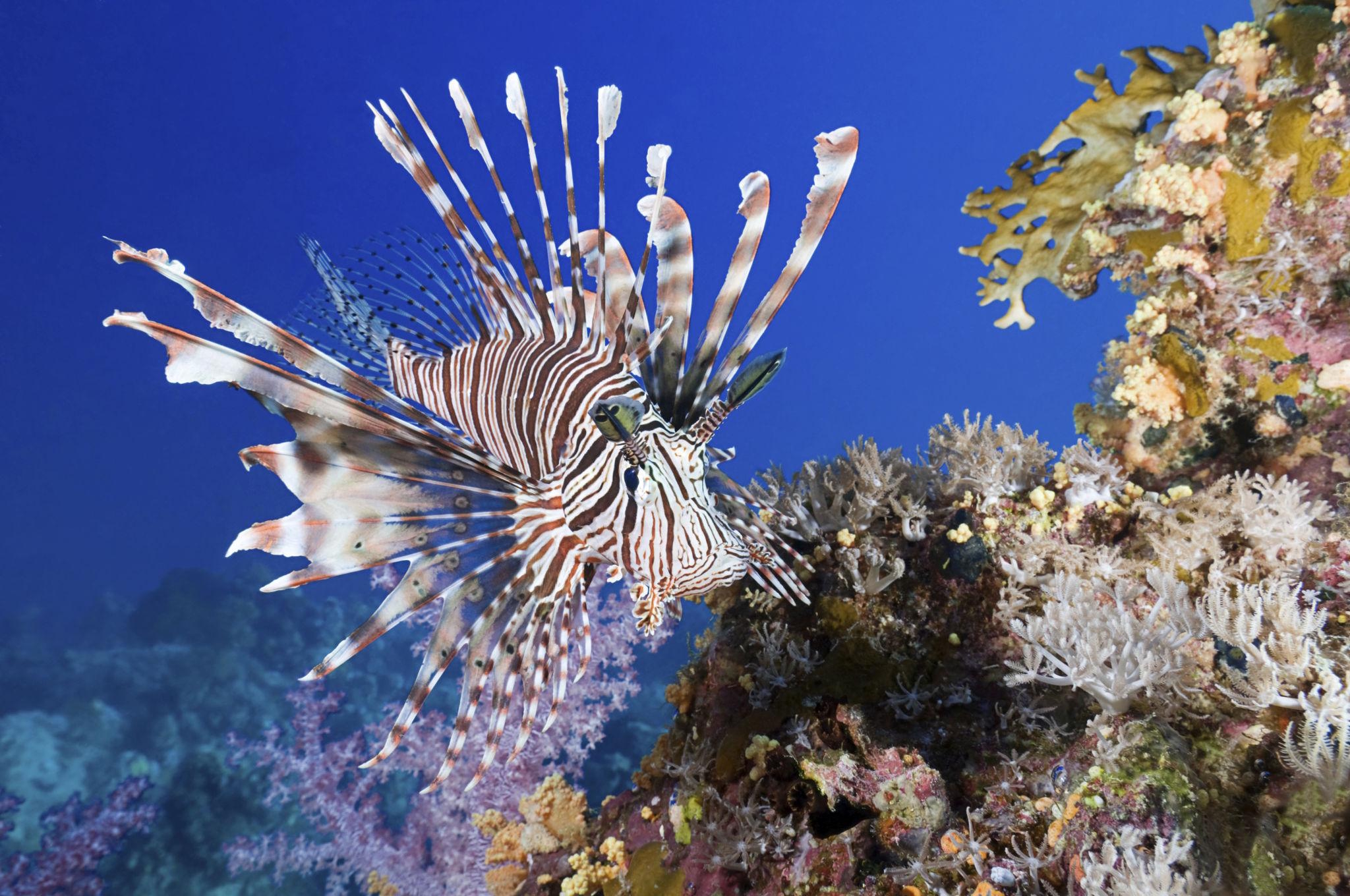
Few marine creatures combine elegance and danger quite like the lionfish. With spectacular fan-shaped fins, striking red-and-white stripes, and long venomous spines, lionfish are among the ocean’s most recognizable fish.
Yet behind this extraordinary appearance lies an ecological challenge. Two species of lionfish have spread far beyond their native range, becoming highly effective invasive predators that threaten native fish communities and coral reef ecosystems.
1. What makes lionfish so beautiful?
Lionfish have distinctive bands of white, brown, reddish-orange and maroon. Their broad pectoral fins resemble delicate feathers, while their dorsal spines create an impressive crown-like silhouette.
Their appearance serves practical purposes. Stripes can help disrupt their outline against complex reef backgrounds, and their extended fins are used to corner prey.
Some lionfish grow beyond 45 centimeters in length, although many individuals are smaller.
National Ocean Service
+1
2. Venom: An impressive defense

Lionfish possess venom-bearing spines along their dorsal, pelvic and anal fins. These spines protect them against predators.
A sting may produce severe pain, swelling and other symptoms. Lionfish are venomous, not poisonous to touch simply because of their appearance: venom is delivered when a spine punctures the skin.
Anyone stung should leave the water, seek medical attention promptly and avoid handling the fish.
National Ocean Service
+1
3. A highly effective underwater hunter
Lionfish hunt by approaching their prey slowly, spreading their pectoral fins and cornering smaller animals before swallowing them with a rapid mouth movement.
They prey on numerous species, including juvenile reef fish, shrimp and other crustaceans. Their adaptable feeding habits allow them to thrive across different habitats.
4. How did lionfish become invasive?
Lionfish naturally inhabit Indo-Pacific marine environments, where they are part of established food webs. But their introduction to western Atlantic waters dramatically changed their ecological role.
They were documented near Florida during the 1980s. Aquarium releases are considered a likely introduction pathway, although the complete history of the invasion remains uncertain.
They subsequently became established across much of the Caribbean, Gulf of Mexico and southeastern United States.
NOAA Fisheries
+1
5. Why invasive lionfish are dangerous to reefs
Reproductive potential
2 million+
Eggs per female annually under favorable conditions
Observed local impact
79%
Reduction in native reef-fish recruitment in one study
These figures illustrate reproductive capacity and findings from particular research settings; they are not universal outcomes for every reef. Sources: NOAA.
NOAA Fisheries
+1
Lionfish can threaten reef ecosystems through intense predation, competition with native predators and consumption of herbivorous fish that would otherwise help control algae.
There is an important distinction between an aggressive invasive species and a species that is harmful everywhere: lionfish are natural members of Indo-Pacific ecosystems. The management problem is particularly severe where they have been introduced outside their native range.
NOAA also reports that surveyed lionfish populations along parts of the southeastern United States peaked around 2016 and subsequently declined, although serious ecological impacts remain.
NOAA Fisheries
6. How scientists and divers are responding
Conservation programs use targeted removals, public education, research and monitoring to limit lionfish numbers in invaded regions.
Professional and trained divers participate in organized removals, while regulated fisheries can create incentives for harvesting lionfish. Properly processed lionfish flesh is edible, despite the danger presented by the spines. Local seafood safety guidance still applies.
NOAA Fisheries
+1
7. Can lionfish be kept in aquariums?
Lionfish are admired by experienced marine aquarists, but their venomous spines, predatory diet and specialized husbandry requirements demand caution.
They must never be released into the ocean or local waterways. Aquarium releases can introduce non-native species and lead to lasting ecological consequences.
Conclusion
Lionfish are a remarkable example of how beauty and ecological danger can coexist in the natural world. Their elegant fins and vivid colors make them fascinating subjects for underwater photography, while their rapid reproduction and predatory behavior present major challenges where they become invasive.
Understanding lionfish means appreciating them in their native environment while protecting vulnerable ecosystems from their spread.
Media package for the publisher
Recommended photography

Featured image — lionfish with fully spread fins

Facial markings and detailed anatomy

Lionfish in its reef habitat

Invasive lionfish populations
For the full 10-image gallery, prioritize photographs documenting lionfish anatomy, venomous spines, hunting, juveniles, reef habitats, invasive populations, research divers and removal programs. Useful source collections include NOAA Lionfish Media and Wikimedia Commons. Image licensing and attribution must be checked before publication.
Three recommended videos

NOAA Ocean Today
The invasion of Atlantic reef ecosystems.

2. The Shocking New Predators Targeting Lionfish
BBC Earth Science
Innovative responses to invasive lionfish.
NOAA Ocean Today
How responsible harvesting can contribute to invasive species control.
WordPress SEO package
| Field | Recommended value |
|---|---|
| Website | fishes.bin3aiah.net |
| Article ID | FISH — Lionfish |
| SEO title | Lionfish: Beauty, Venom and Invasive Populations |
| Slug | lionfish-beauty-venom-invasive-populations |
| Focus keyword | Lionfish |
| Secondary keywords | Lionfish venom, invasive lionfish, Pterois volitans, lionfish habitat |
| Category | Marine Fish |
| Suggested tags | Lionfish, Venomous Fish, Coral Reefs, Invasive Species, Marine Life |
Meta description: Discover the fascinating lionfish, its venomous spines, hunting behavior, and the ecological threat of invasive populations to Atlantic coral reefs.
Featured image alt text: Red lionfish displaying striped fins and venomous dorsal spines while swimming above a coral reef.
Primary research sources: NOAA Lionfish Facts and NOAA Invasive Lionfish Impacts.
Publication status
Article and SEO package prepared. Media licensing and WordPress publishing remain outstanding.
Not published