
Views: 1
Napoleon Wrasse: The Giant Reef Fish with a Distinctive Hump
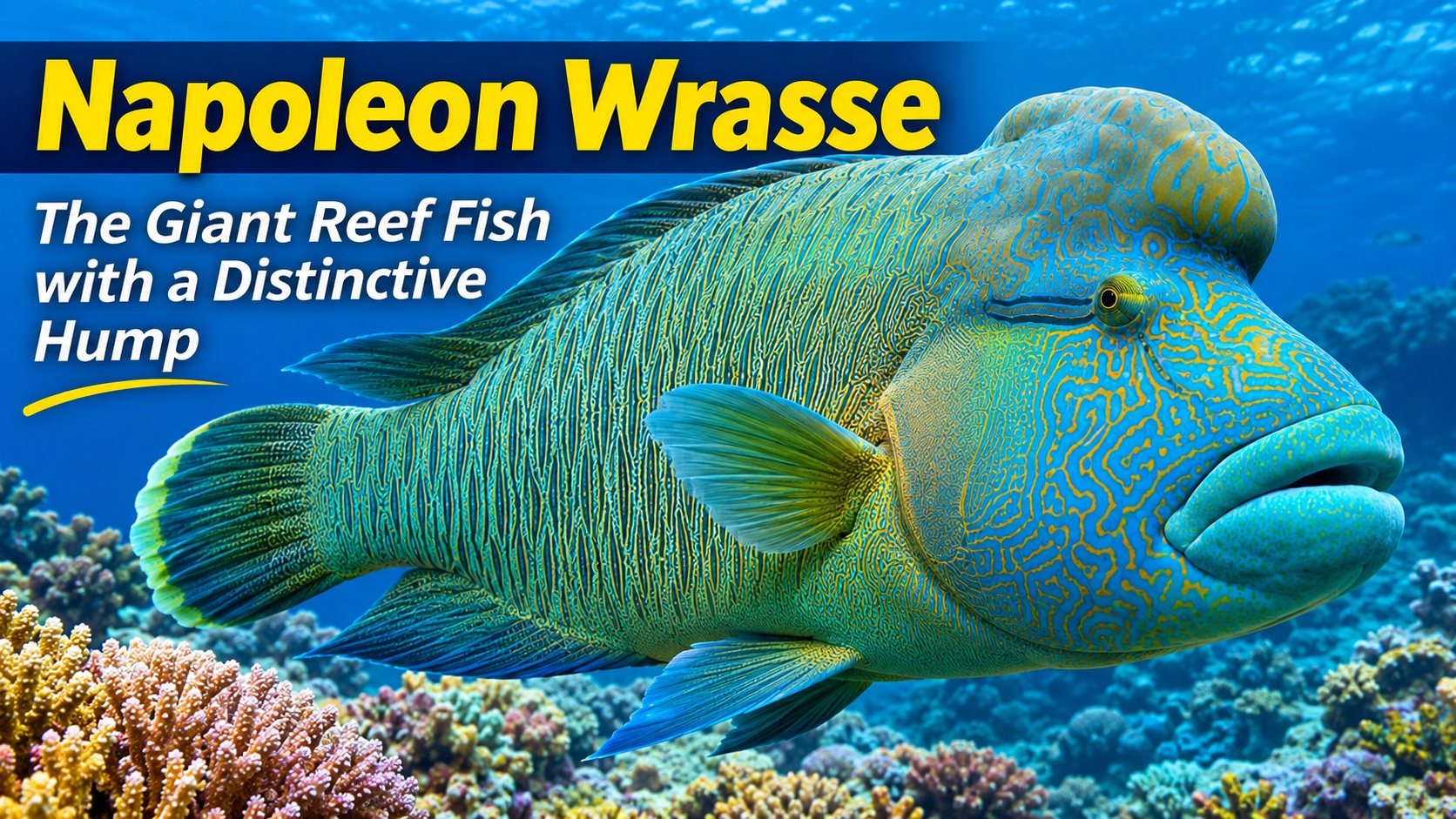
The Napoleon wrasse, also known as the humphead wrasse or Māori wrasse, is one of the most extraordinary fish living among tropical coral reefs. Famous for its enormous size, prominent forehead hump, thick lips, and striking blue-green patterns, this marine giant is a spectacular sight for underwater explorers.
Scientifically named Cheilinus undulatus, it is the largest living member of the wrasse family, Labridae. Despite its impressive appearance, the species faces serious conservation challenges and is classified as Endangered.

Napoleon Wrasse: Quick Facts
| Feature | Information |
|---|---|
| Scientific Name | Cheilinus undulatus |
| Family | Labridae |
| Common Names | Napoleon Wrasse, Humphead Wrasse, Māori Wrasse |
| Habitat | Tropical coral reefs |
| Distribution | Indo-Pacific and Red Sea |
| Maximum Recorded Length | Approximately 2.3 metres |
| Maximum Reported Weight | Approximately 191 kg |
| Diet | Mollusks, crustaceans, echinoderms and other reef animals |
| Conservation Status | Endangered |
| CITES | Appendix II |
Note: Maximum measurements represent exceptional specimens, not typical adult sizes.
1. Why Does the Napoleon Wrasse Have a Hump?
The most recognizable feature of this remarkable species is the prominent hump extending from its forehead. The hump develops with age and can become particularly striking in large adults.
The fish also has thick lips, powerful jaws, and intricate patterns around its eyes and face. Its coloration varies with age and development, ranging from greenish and brownish tones to brilliant blue-green hues.
The common name Napoleon wrasse is often linked to the hump’s resemblance to the bicorne hat associated with Napoleon Bonaparte.
2. Habitat and Geographic Distribution
Napoleon wrasses live throughout tropical waters of the Indian and Pacific Oceans, including the Red Sea, eastern Africa, Southeast Asia, Australia, and many Pacific islands.
They are closely associated with coral reef ecosystems. Juveniles often occupy sheltered reef habitats, while larger adults are frequently observed near reef slopes, lagoons, channels, and outer reef formations.

3. What Does the Napoleon Wrasse Eat?
The Napoleon wrasse is a carnivorous reef predator with a varied diet. Its strong jaws allow it to feed on animals that may be difficult for smaller reef fish to consume.
- Mollusks: Including shell-bearing marine animals.
- Crustaceans: Such as crabs and other reef-dwelling species.
- Sea urchins: Hard-bodied invertebrates living around reef structures.
- Other reef animals: Including selected echinoderms and marine invertebrates.
Remarkably, Napoleon wrasses are capable of consuming certain toxic reef animals, including crown-of-thorns starfish.
4. Size, Growth and Lifespan
The Napoleon wrasse is the largest living species within the wrasse family. Exceptional individuals have been reported at approximately 2.3 metres in length, while published maximum weights reach about 191 kilograms.
However, most individuals encountered by divers are considerably smaller than these extraordinary maximum records.
Its relatively slow life history and vulnerability to fishing pressure make conservation particularly important.
5. Can Napoleon Wrasses Change Sex?
One of the most fascinating aspects of Napoleon wrasse biology is that some individuals can change from female to male during their lives.
This reproductive characteristic is called protogynous hermaphroditism. Not every individual necessarily changes sex, and reproductive development is complex.
The removal of large breeding fish through intensive fishing can disrupt population structure, potentially affecting reproduction and long-term recovery.

6. Why Is the Napoleon Wrasse Endangered?
The Napoleon wrasse is listed as Endangered on the IUCN Red List. Several human activities threaten populations throughout its geographic range.
Overfishing
The species is highly valued in some live reef fish markets. Fishing pressure can reduce populations, especially when large breeding individuals are removed.
Illegal and Unsustainable Trade
High commercial value can encourage illegal harvesting and trade. The species is included in CITES Appendix II, which regulates international trade.
Coral Reef Degradation
Coral bleaching, pollution, coastal development, and destructive fishing practices can damage the ecosystems on which Napoleon wrasses depend.
Biological Vulnerability
Natural rarity, reproductive characteristics, and life-history traits can make heavily exploited populations difficult to rebuild.
7. The Napoleon Wrasse’s Role in Coral Reef Ecosystems
As a large reef predator, the Napoleon wrasse feeds on various invertebrates and participates in the complex food webs that support coral reef biodiversity.
Its presence is an important part of reef wildlife communities. Protecting this species also supports broader efforts to conserve healthy marine ecosystems.
8. Fascinating Napoleon Wrasse Facts
- It is the world’s largest living wrasse species.
- Its forehead hump becomes more noticeable as it matures.
- Some individuals can change sex from female to male.
- It inhabits coral reefs across a vast Indo-Pacific distribution.
- It has powerful jaws and an unusually varied invertebrate diet.
- It is threatened by overfishing and international market demand.
- Its international trade is regulated through CITES Appendix II.
- It is one of the most recognizable large reef fish encountered by divers.
9. How Can We Protect the Napoleon Wrasse?
Conserving this remarkable fish requires coordinated action to protect reef habitats and manage fisheries responsibly.
- Establish and enforce effective marine protected areas.
- Monitor fishing activity and illegal international trade.
- Protect breeding habitats and important reef ecosystems.
- Reduce pollution and destructive fishing practices.
- Support marine research and population monitoring.
- Encourage responsible diving and wildlife tourism.
Conclusion: A Giant Worth Protecting
The Napoleon wrasse is one of the most spectacular inhabitants of tropical coral reefs. Its massive body, distinctive forehead hump, remarkable reproductive biology, and ecological role make it a true symbol of marine biodiversity.
Yet its future depends on effective conservation. By protecting the Napoleon wrasse and the reef ecosystems it inhabits, we can help safeguard one of the ocean’s most extraordinary fish for future generations.
References and Further Reading
- Florida Museum – Humphead Wrasse
- World Wildlife Fund – Humphead Wrasse
- Great Barrier Reef Foundation – Māori Wrasse
Image license for the Tuvalu photograph: Creative Commons Attribution 4.0 International. Original image: Wikimedia Commons.
Explore more marine wildlife, fascinating fish species and underwater discoveries at Bin3aiah Fishes.