
Views: 15
Zebra Shark: Life on Tropical Coral Reefs
Discover the fascinating appearance, habitat, feeding behavior, reproduction, and conservation of the zebra shark.

The zebra shark (Stegostoma tigrinum) is one of the most distinctive sharks inhabiting tropical coral reefs. Famous for its unusual transformation from stripes to spots, this fascinating species is a slow-moving, bottom-dwelling predator that plays an important role in marine ecosystems.
Unlike many fast-swimming sharks, zebra sharks spend much of their time resting on sandy seabeds and near coral formations. They become more active at night, searching reef crevices for shellfish, crustaceans, and small fish.
Although they can grow to impressive lengths, zebra sharks are generally nonaggressive toward humans when left undisturbed.
1. Zebra Shark: Quick Facts
| Common Name | Zebra Shark |
|---|---|
| Scientific Name | Stegostoma tigrinum |
| Family | Stegostomatidae |
| Habitat | Tropical coral reefs, sandy lagoons, coastal waters |
| Distribution | Indian and Western Pacific Oceans |
| Maximum Length | Approximately 3.5 meters |
| Diet | Mollusks, crustaceans, small fish |
| Activity | Primarily nocturnal |
| Reproduction | Egg-laying (oviparous) |
| Conservation Status | Endangered (IUCN) |
2. Why Is It Called a Zebra Shark?
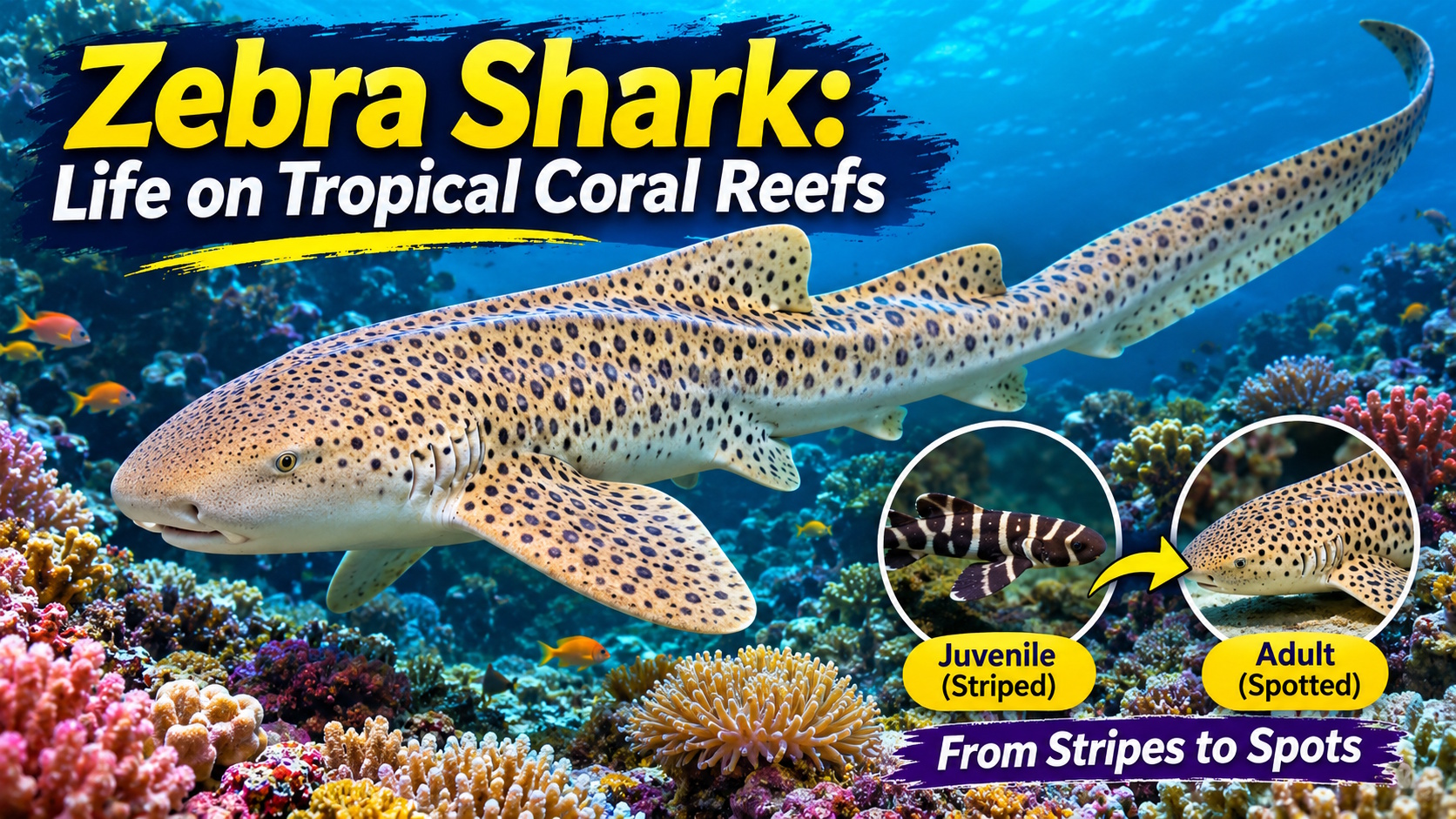
One of the most remarkable characteristics of the zebra shark is the dramatic transformation in its coloration as it grows.
Young zebra sharks are dark brown or nearly black with prominent pale stripes. These markings resemble a zebra’s stripes and give the species its common name.
As the shark matures, the stripes gradually disappear and are replaced by dark spots over a lighter cream, yellowish, or brown background.


Because of their spotted adult appearance, zebra sharks are sometimes called leopard sharks in parts of their natural range.
Other identifying features include a flattened head, broad pectoral fins, prominent body ridges, and a long tail that can account for nearly half the shark’s overall length.
3. Life on Tropical Coral Reefs

Zebra sharks inhabit warm coastal waters throughout the Indo-West Pacific, including parts of the Red Sea, East Africa, Southeast Asia, Australia, and the western Pacific.
They are commonly associated with:
- Coral reefs and reef slopes
- Sandy lagoons and coastal seabeds
- Shallow tropical coastal waters
- Channels and sheltered reef environments
How Do Zebra Sharks Rest Underwater?
During daylight hours, zebra sharks frequently rest on the seafloor. Unlike sharks that must swim continuously to ventilate their gills, zebra sharks can circulate water over their gills while remaining stationary.
This adaptation allows them to conserve energy while resting in sheltered reef locations.
4. Feeding Habits and Hunting Behavior

Zebra sharks are primarily nocturnal predators. After sunset, they explore sandy areas, reef crevices, and rocky formations in search of food.
What Do Zebra Sharks Eat?
- Mollusks: Marine snails, clams, and other shellfish.
- Crustaceans: Crabs, shrimp, and related animals.
- Small Fish: Bottom-dwelling species inhabiting reef environments.
- Other Invertebrates: Small animals found in sand and reef crevices.
The zebra shark’s flexible body enables it to maneuver into narrow spaces. Its powerful suction-feeding mechanism helps draw hidden prey into its relatively small mouth.
Rather than chasing prey at high speed, zebra sharks rely on careful searching and specialized feeding techniques.
5. Reproduction and the Zebra Shark Life Cycle
Zebra sharks are oviparous, meaning females lay eggs instead of giving birth to fully developed live young.
The females produce large, dark, leathery egg capsules equipped with fibers that help anchor them to underwater structures.
Embryos develop inside these protective capsules and receive nutrition from their yolk reserves.
After several months of development, the young sharks emerge from their egg cases as miniature versions of their parents, although their coloration is dramatically different.
An Extraordinary Reproductive Ability
Scientists have documented rare cases of parthenogenesis in captive zebra sharks.
This process allows offspring to develop from unfertilized eggs. Although unusual, these observations provide important insights into shark reproductive biology.
6. Zebra Sharks and Coral Reef Ecosystems

As predators of bottom-dwelling animals, zebra sharks participate in complex marine food webs.
Their feeding activities influence interactions among reef-associated fish, crustaceans, mollusks, and other marine organisms.
Healthy coral reef habitats provide zebra sharks with important feeding areas, shelter, and suitable environments for different stages of their lives.
7. Conservation: Why Are Zebra Sharks Endangered?
The zebra shark is classified as Endangered by the International Union for Conservation of Nature (IUCN).
Populations have experienced significant declines in several regions because of human activities.
Major Threats
- Fishing Pressure: Targeted and incidental capture in commercial fisheries.
- Habitat Degradation: Damage to coral reefs and coastal ecosystems.
- Coastal Development: Disturbance of important shallow-water habitats.
- Unsustainable Marine Resource Use: Activities that place additional pressure on shark populations.
Protecting Zebra Sharks
Conservation strategies include marine protected areas, better fisheries management, habitat protection, scientific monitoring, and breeding programs.
Projects such as the international zebra shark recovery efforts in Indonesia aim to restore depleted populations through carefully managed conservation breeding and releases.
8. Fascinating Zebra Shark Facts
- They change their appearance: Juveniles have stripes, while adults develop spots.
- They have exceptionally long tails: Their tails can approach half their total body length.
- They are nocturnal: Most feeding activity occurs during the evening and nighttime.
- They can rest without swimming: Specialized respiration allows them to remain stationary.
- They lay eggs: Their embryos develop inside protective egg capsules.
- They are generally gentle: Zebra sharks rarely threaten humans when treated respectfully.
- They need conservation: Fishing and habitat loss threaten populations across much of their range.
9. Frequently Asked Questions
Are zebra sharks dangerous to humans?
Zebra sharks are generally docile and rarely aggressive toward humans. However, as with all wildlife, they should not be touched, chased, or disturbed.
Where do zebra sharks live?
They inhabit tropical coastal waters across the Indian and western Pacific Oceans, especially around coral reefs, sandy lagoons, and shallow seabeds.
Why do adult zebra sharks have spots instead of stripes?
Their pigmentation changes naturally as they mature. Juvenile stripes gradually transform into the characteristic spotted pattern of adults.
How large can zebra sharks grow?
Zebra sharks can reach approximately 3.5 meters in total length, although many individuals are smaller.
Are zebra sharks endangered?
Yes. The species is listed as Endangered on the IUCN Red List, with fishing pressure and habitat degradation among its important threats.
Conclusion
The zebra shark is one of the most fascinating inhabitants of tropical coral reef ecosystems. Its striking transformation from stripes to spots, distinctive body shape, nocturnal feeding behavior, and remarkable reproductive biology make it an extraordinary marine species.
Despite its peaceful nature, the zebra shark faces serious conservation challenges. Protecting its remaining populations and safeguarding healthy coral reef habitats are essential steps toward securing the future of this remarkable shark.
Explore more fascinating marine species and underwater wildlife at Bin3aiah Fishes.
References and Further Reading
- Florida Museum – Zebra Shark
- Aquarium of the Pacific – Zebra Shark
- Georgia Aquarium – Zebra Shark
- National Aquarium – Zebra Shark
Photography: Wikimedia Commons contributors. Review each photograph’s individual attribution and license requirements before publication.