
Views: 0
BIN3AIAH FISHES | MARINE LIFE
Blue Tang: Habitat, Behavior and Reef Ecology
Discover one of the ocean’s most recognizable reef fish and its fascinating relationship with tropical coral ecosystems.

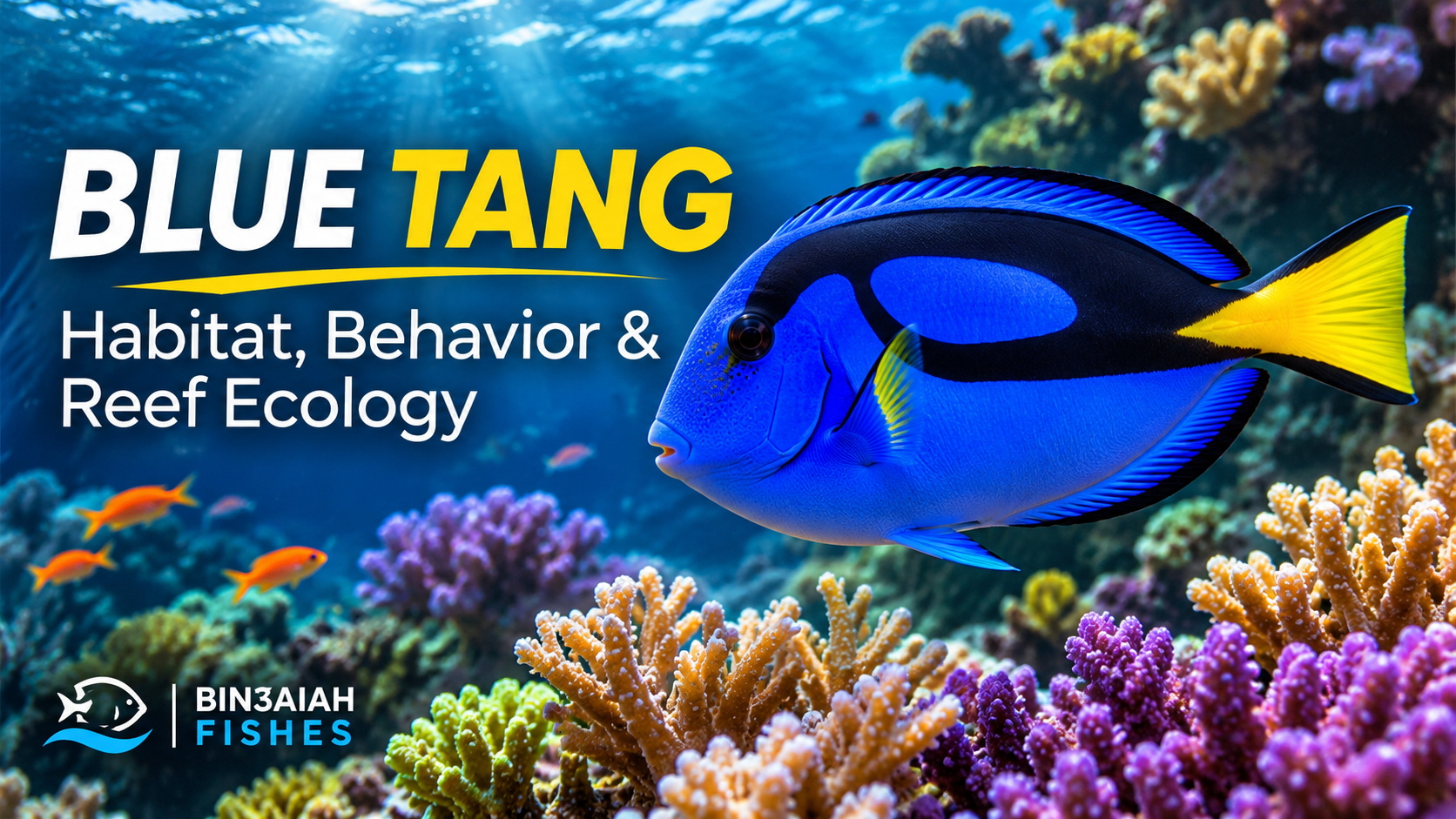
The blue tang (Paracanthurus hepatus), also known as the regal tang, hippo tang or palette surgeonfish, is a spectacular marine fish found throughout tropical Indo-Pacific waters. Its electric-blue coloration, distinctive black markings and bright yellow tail make it instantly recognizable.
Beyond its beautiful appearance, the blue tang is an active member of the coral reef ecosystem, interacting with algae, plankton, corals and numerous marine species.
Blue Tang: Quick Facts
| Scientific Name | Paracanthurus hepatus |
| Family | Acanthuridae |
| Common Names | Regal tang, hippo tang, palette surgeonfish |
| Maximum Length | Approximately 31 cm |
| Habitat | Tropical coral reefs |
| Distribution | Indo-Pacific Ocean |
| Depth Range | Approximately 2–40 metres |
| Diet | Algae and zooplankton |
| Activity | Primarily daytime |
| Reproduction | Broadcast spawning |
1. Physical Appearance
The blue tang has a flattened, oval-shaped body that allows it to move efficiently through complex reef environments. Its striking coloration includes:
- A brilliant royal-blue body.
- Dark markings resembling an artist’s palette.
- A bright yellow tail.
- Sharp defensive spines near the base of the tail.
Its blue coloration is partly produced by specialized light-reflecting cells called iridophores. These cells contain microscopic structures that reflect particular wavelengths of light.

2. Natural Habitat and Distribution
Blue tangs inhabit warm tropical waters across the Indian and Pacific oceans, particularly around coral reefs exposed to ocean currents.
Their geographical distribution includes:
- Eastern Africa and western Indian Ocean islands.
- Indonesia and the Philippines.
- Southern Japan.
- Australia’s Great Barrier Reef.
- New Caledonia and Samoa.
- Parts of the central Pacific Ocean.
They are commonly associated with outer reef slopes and branching corals. These habitats provide access to food, shelter and protection from predators.

3. Behavior and Social Life
Blue tangs are energetic swimmers that spend much of the day searching for food and moving through reef habitats. They may live individually, in pairs or in loose groups.
Schooling Behavior
Young blue tangs frequently gather near coral formations. Group living can help individuals detect potential dangers and locate suitable feeding areas.
Hiding and Protection
When threatened, blue tangs may retreat into narrow gaps between coral branches. Their compressed bodies allow them to enter spaces that larger predators cannot easily reach.
Natural Defense
Like other surgeonfish, blue tangs possess sharp spines near the base of their tails. These structures can inflict injuries when the fish defends itself.
4. Diet and Feeding Habits
The blue tang consumes both algae and tiny drifting organisms known as zooplankton. Its feeding habits vary with age, food availability and environmental conditions.
- Small marine algae.
- Microscopic crustaceans.
- Zooplankton carried by ocean currents.
- Other suitable organic food particles.
Algae grazing contributes to reef maintenance, while plankton feeding connects the blue tang with the wider marine food web.

5. Importance in Coral Reef Ecology
Coral reefs depend on complex relationships between hundreds of marine species. Blue tangs contribute to these relationships through their feeding behavior and position within the food chain.
Ecological Contributions
- Algae management: Grazing helps limit excessive algae growth.
- Food-web connectivity: Feeding on plankton transfers nutrients into the reef food chain.
- Nutrient cycling: Feeding and waste production redistribute nutrients.
- Predator support: Blue tangs provide food for larger marine predators.
- Biodiversity: They form part of diverse tropical reef fish communities.
Although the blue tang contributes to algae control, healthy reefs require many different grazing species, including other surgeonfish, parrotfish and marine invertebrates.
6. Natural Predators
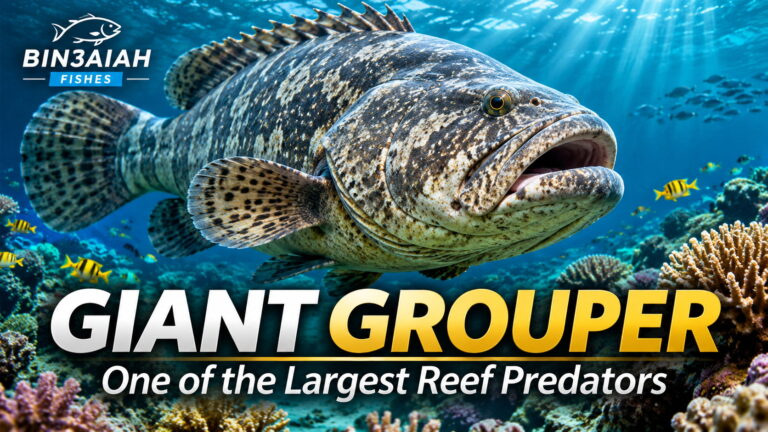
Blue tangs can become prey for larger carnivorous reef fish, including groupers. Their speed, defensive tail spines and ability to shelter within corals help improve their chances of survival.
Juveniles are particularly vulnerable, making healthy branching coral habitats important protective environments.
7. Reproduction and Life Cycle
Blue tangs reproduce through broadcast spawning, releasing reproductive cells into the surrounding seawater.
- Adult fish gather for spawning.
- Eggs and sperm are released into the water.
- Fertilized eggs develop while floating in the ocean.
- Larvae drift with ocean currents.
- Young fish eventually settle into suitable reef habitats.
- Juveniles develop into mature reef-dwelling adults.
This reproductive strategy allows ocean currents to transport offspring between reef systems.
8. Environmental Threats and Conservation
Blue tangs depend on healthy tropical reef ecosystems. Environmental changes that damage coral reefs can reduce their access to food and shelter.
Major Environmental Threats
- Rising ocean temperatures and coral bleaching.
- Ocean acidification.
- Marine pollution.
- Coastal development and habitat destruction.
- Unsustainable collection for the aquarium trade.
- Destructive fishing practices.
Marine protected areas, responsible aquarium sourcing, improved water quality and climate action can help preserve reef ecosystems and their inhabitants.
9. Blue Tangs in Marine Aquariums
Blue tangs are popular aquarium fish because of their beautiful colors and active swimming behavior. However, their adult size and environmental needs make them unsuitable for small or poorly maintained aquariums.
Responsible aquarium keeping requires:
- A spacious marine aquarium with ample swimming room.
- Stable salinity and water temperature.
- Efficient filtration and oxygenation.
- A varied, nutritionally balanced diet.
- Suitable rockwork and hiding spaces.
- Responsible sourcing, preferably captive-bred specimens when available.
They are generally better suited to experienced marine aquarium keepers.
10. Fascinating Blue Tang Facts
- The species was scientifically described in 1766.
- It is the only living species in the genus Paracanthurus.
- Its defensive tail spines explain the name surgeonfish.
- Adults can reach approximately 31 centimetres in length.
- It can shelter inside branching coral formations.
- Its coloration involves microscopic reflective structures.
- It consumes both algae and zooplankton.
- Its larvae spend an early developmental period drifting in open water.
- It is different from the Atlantic blue tang, Acanthurus coeruleus.
- It inspired the animated character Dory in Finding Nemo.
11. Blue Tang Photography Gallery


Explore more blue tang photographs on Wikimedia Commons.
12. Blue Tang Videos
Frequently Asked Questions
Where do blue tangs live?
They inhabit tropical coral reefs throughout the Indo-Pacific Ocean.
What do blue tangs eat?
They feed on algae and zooplankton, with feeding habits varying according to age and environmental conditions.
How large does a blue tang grow?
It can reach approximately 31 centimetres in length.
Are blue tangs dangerous?
They are not normally dangerous to humans, but their sharp defensive spines can cause injuries if handled.
Why are blue tangs important to coral reefs?
They contribute to algae management, nutrient cycling and the marine food web.
Is Dory a blue tang?
Yes. The fictional character Dory was inspired by the Indo-Pacific regal blue tang.
Conclusion
The blue tang is much more than a colorful tropical fish. Its distinctive appearance, specialized defenses and relationship with coral reef ecosystems demonstrate the extraordinary diversity of marine life.
Protecting coral reefs helps ensure that future generations can continue to discover these remarkable underwater creatures.
Discover more extraordinary marine species with Bin3aiah Fishes.
Explore More Marine Life