
Views: 0
Giant Grouper: One of the Largest Reef Predators

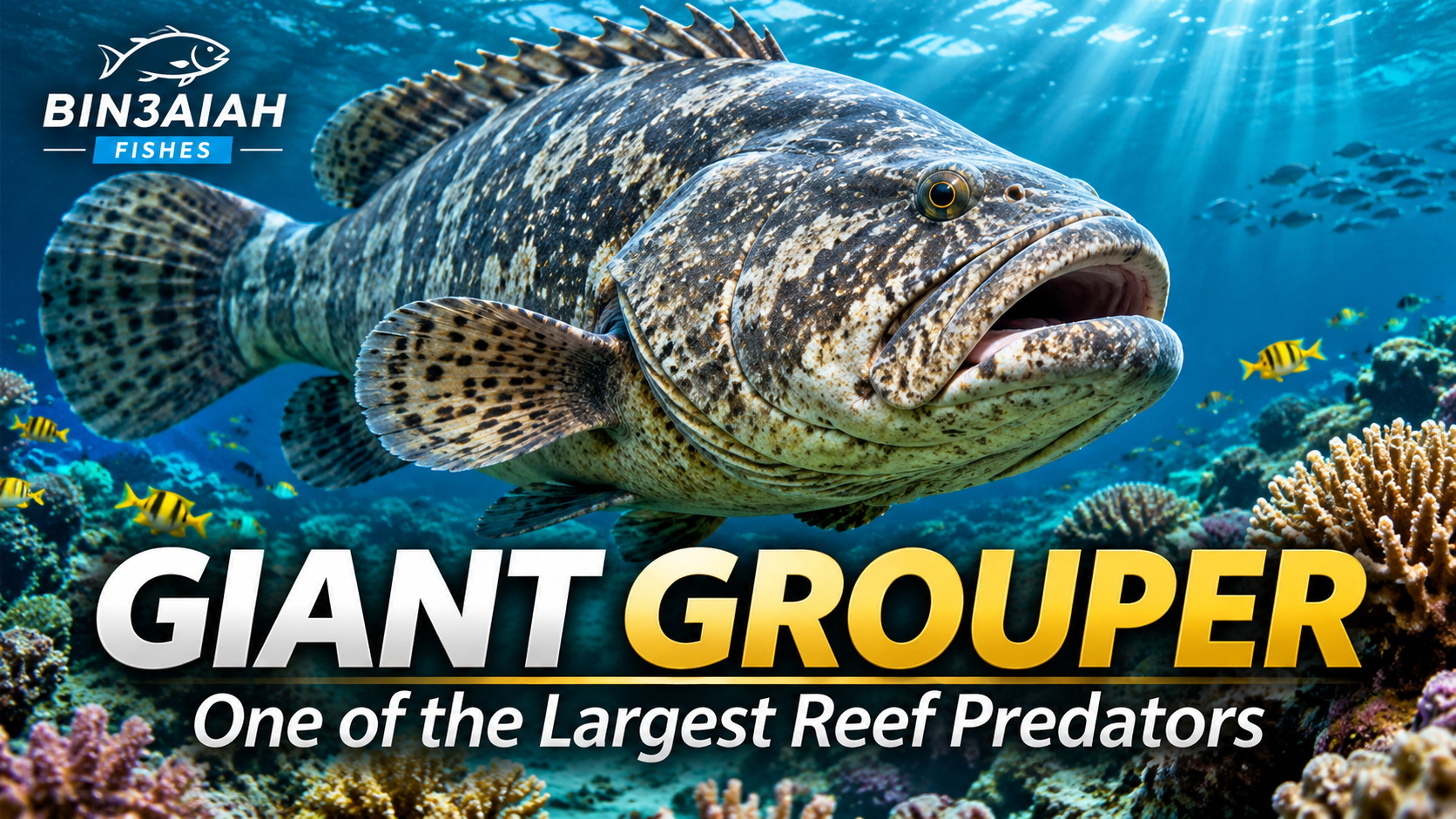
The giant grouper (Epinephelus lanceolatus), also known as the Queensland groper, is one of the largest bony fish associated with coral reefs. With its enormous body, powerful mouth and remarkable hunting abilities, this impressive marine predator is a fascinating inhabitant of the tropical Indo-Pacific Ocean.
Despite its massive size, the giant grouper is an effective ambush predator, relying on camouflage, patience and sudden bursts of movement to capture its prey.
Giant Grouper: Quick Facts
| Common name | Giant Grouper |
| Scientific name | Epinephelus lanceolatus |
| Alternative name | Queensland Groper |
| Maximum reported length | Approximately 2.7 metres or more |
| Maximum reported weight | Over 400 kg |
| Distribution | Indo-Pacific |
| Habitat | Coral reefs, rocky reefs, caves and wrecks |
| Diet | Carnivorous |
| Hunting method | Ambush and suction feeding |
1. Appearance and Physical Characteristics
The giant grouper has a broad head, thick muscular body, enormous mouth and rounded tail. Adult fish generally display grey, brown or greenish coloration with mottled patterns that help them blend into rocky marine environments.
Juveniles look remarkably different, displaying contrasting yellow and black markings that gradually become less prominent as they mature.
- Large mouth adapted for capturing prey.
- Heavy, muscular body.
- Rounded tail and powerful fins.
- Camouflaged adult coloration.
- Distinctive yellow and black juvenile markings.

2. How Big Can a Giant Grouper Grow?
Exceptional individuals can reach approximately 2.7 metres in length and weigh more than 400 kilograms. These remarkable dimensions place the species among the largest reef-associated bony fish in the world.
Reported Length
Reported Weight
Most individuals encountered by divers are smaller than these exceptional specimens.
3. Natural Habitat and Distribution
Giant groupers inhabit tropical and subtropical waters across the Indo-Pacific, including parts of the Indian Ocean, Southeast Asia, Australia and the western Pacific.
They are associated with structurally complex marine habitats that provide shelter and opportunities to hunt.
- Coral reef systems.
- Rocky underwater formations.
- Underwater caves and crevices.
- Shipwrecks and artificial reefs.
- Coastal waters and estuaries.
4. What Does the Giant Grouper Eat?
The giant grouper is an opportunistic carnivore capable of consuming a wide variety of marine animals. Its large mouth allows it to capture substantial prey.
- Reef fish.
- Crabs and lobsters.
- Other marine crustaceans.
- Small sharks and rays.
- Juvenile sea turtles.
5. Hunting Techniques
Instead of continuously pursuing prey, giant groupers often remain close to structures and wait for suitable feeding opportunities.
When prey approaches, the grouper can rapidly expand its mouth cavity, generating suction that draws the animal inside. This feeding mechanism is particularly effective in complex reef environments.
The giant grouper’s enormous mouth is not simply a physical characteristic. It is an effective biological tool for suction feeding.
6. Behaviour and Lifestyle
Giant groupers are frequently observed swimming slowly around reefs or resting near underwater structures. Adults are often solitary and may occupy sheltered areas with convenient access to food.
Although they can appear calm and inactive, they are capable of rapid movements when capturing prey or responding to disturbances.
7. Giant Grouper vs Atlantic Goliath Grouper
The giant grouper is sometimes confused with the Atlantic goliath grouper. Although both species can reach extraordinary sizes, they are distinct fish with different natural distributions.
| Feature | Giant Grouper | Atlantic Goliath Grouper |
|---|---|---|
| Scientific name | E. lanceolatus | E. itajara |
| Distribution | Indo-Pacific | Tropical Atlantic |
| Habitat | Reefs and coastal structures | Reefs, wrecks and mangroves |
| Feeding | Ambush predator | Ambush predator |
8. Is the Giant Grouper Dangerous to Humans?
Its enormous size means that the giant grouper should be treated with respect. However, it does not normally regard humans as prey.
Divers should maintain a safe distance, avoid touching or feeding wild groupers and never attempt to provoke or corner them.
9. Importance to Marine Ecosystems
As a large reef predator, the giant grouper contributes to marine food-web dynamics by feeding on fish and other animals.
Protecting large marine predators helps preserve the ecological relationships and biodiversity of reef environments.
10. Threats and Conservation
Giant groupers face several human-related pressures, particularly fishing and the degradation of coastal marine habitats.
- Commercial and recreational fishing.
- Live reef fish trade.
- Destruction of coral reef habitats.
- Marine pollution.
- Climate-related changes to marine ecosystems.
Marine protected areas, sustainable fishing practices and habitat conservation can contribute to the protection of wild grouper populations.
11. Fascinating Giant Grouper Facts
- It is among the largest reef-associated bony fish.
- Exceptional specimens can outweigh several adult humans combined.
- Juveniles have striking yellow and black markings.
- It uses suction to capture prey.
- Its diet includes fish, crustaceans and small sharks.
- It is also known as the Queensland groper.
- It can inhabit artificial reefs and shipwrecks.
- It is a different species from the Atlantic goliath grouper.
- It is the official aquatic emblem of Queensland, Australia.
- It plays an important role in tropical marine food webs.
12. Giant Grouper Photo Gallery


Gallery photographs: James H, Wikimedia Commons, CC BY 4.0.
Explore more species photographs in the Giant Grouper Wikimedia Commons collection.
13. Giant Grouper Underwater Videos
Discover the extraordinary size, behaviour and underwater movements of giant groupers.
▶ Giant Grouper Underwater Encounters ▶ Giant Grouper Feeding Behaviour ▶ Queensland Grouper Marine DocumentariesFrequently Asked Questions
What is the largest grouper species?
The giant grouper is among the largest grouper species, alongside the goliath groupers.
Can a giant grouper weigh over 400 kilograms?
Yes. Exceptional specimens exceeding 400 kilograms have been reported.
Where do giant groupers live?
They inhabit tropical and subtropical marine environments throughout the Indo-Pacific.
What do giant groupers eat?
They consume fish, crustaceans and various other marine animals.
Are giant groupers sharks?
No. Giant groupers are bony fish, whereas sharks are cartilaginous fish.
Conclusion
The giant grouper is an extraordinary example of the size, diversity and adaptability of marine life. Its powerful anatomy, distinctive appearance and impressive hunting abilities make it one of the most fascinating predators of tropical reef ecosystems.
Protecting its natural environment is important for preserving the rich biodiversity of our oceans.