
Views: 6
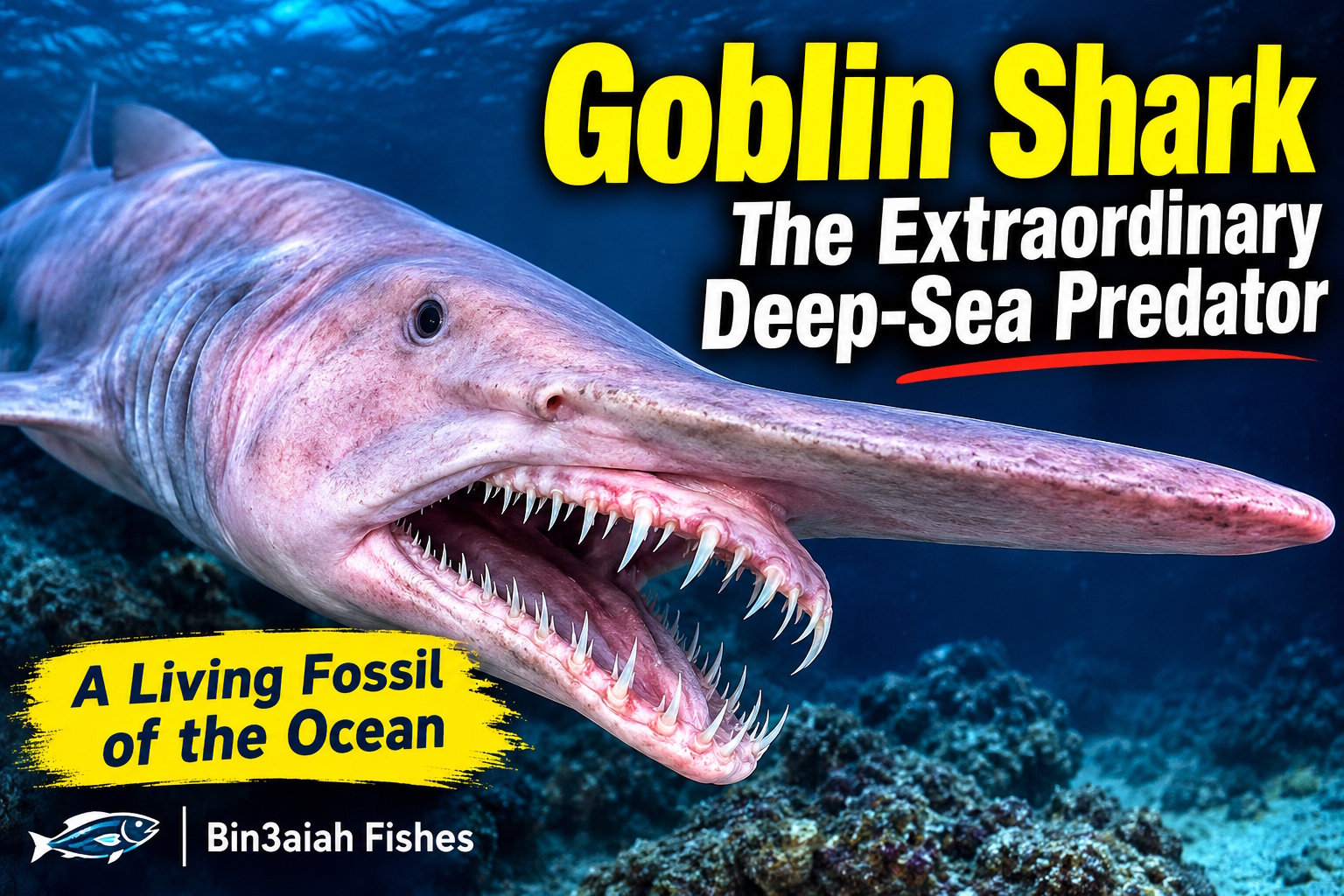
Deep beneath the ocean’s surface lives one of the most extraordinary predators on Earth: the Goblin Shark (Mitsukurina owstoni). With a long, blade-shaped snout, unusual pinkish skin and jaws that shoot forward to capture prey, this mysterious shark looks unlike almost any other living fish.
Often called a living fossil, the Goblin Shark belongs to an ancient evolutionary lineage. Its remarkable anatomy offers a fascinating glimpse into how predators survive in the dark, cold depths of the ocean.

1. What Is a Goblin Shark?
The Goblin Shark is a rare species of deep-sea shark belonging to the family Mitsukurinidae. It is the only known living representative of this ancient shark family.
The species was scientifically described in 1898 from a specimen collected in Japan. Its unusual shape and highly specialized feeding mechanism distinguish it from more familiar sharks.
2. Goblin Shark Quick Facts
| Common Name | Goblin Shark |
| Scientific Name | Mitsukurina owstoni |
| Family | Mitsukurinidae |
| Habitat | Deep marine waters |
| Recorded Depth | From tens of metres to beyond 1,000 m |
| Adult Length | Often approximately 3–4 metres |
| Diet | Fish, squid and crustaceans |
| Distribution | Atlantic, Pacific and Indian Oceans |
| Key Adaptation | Rapidly protruding jaws |
3. An Extraordinary Appearance
The Goblin Shark has several unusual physical characteristics that distinguish it from other sharks.
The Long, Blade-Shaped Snout
Its elongated snout contains specialized electroreceptors called the ampullae of Lorenzini. These sensory organs detect weak electrical fields generated by nearby animals.
This ability is especially useful in deep water, where sunlight is limited or completely absent.
Pinkish Skin
Goblin Sharks often appear pale pink or greyish-pink. Their relatively translucent skin allows underlying blood vessels to influence their appearance.
A Soft, Flexible Body
Unlike powerful, fast-swimming sharks, the Goblin Shark has a comparatively soft, flabby body and relatively small fins. Its anatomy is suited to a very different deep-sea lifestyle.

4. How the Goblin Shark Hunts
The most remarkable feature of the Goblin Shark is its extraordinary feeding mechanism.
Instead of relying entirely on fast swimming to catch prey, this predator can launch its jaws forward with exceptional speed.
Slingshot Feeding
Scientists describe the process as slingshot feeding.
- The shark approaches a potential prey animal.
- Its sensitive snout helps detect the prey.
- The mouth opens and the jaws move forward.
- Long, slender teeth grip the prey.
- The jaws retract as the shark swallows its meal.
The combination of sensory detection and rapid jaw extension helps the shark capture animals in an environment where food may be scarce.

5. Where Does the Goblin Shark Live?
Goblin Sharks inhabit deep marine environments in several parts of the world, including the Atlantic, Pacific and Indian Oceans.
They are often associated with continental slopes, submarine canyons and other deep-water habitats. Records span a broad depth range, although the species is most commonly associated with waters hundreds of metres deep.
These habitats are characterized by:
- Very limited sunlight
- Cold water temperatures
- High hydrostatic pressure
- Relatively scarce food resources
- Specialized marine organisms
6. What Does the Goblin Shark Eat?
The Goblin Shark is a carnivorous predator that feeds on animals found in deep waters.
Known or reported prey includes:
- Deep-water bony fishes
- Squid and other cephalopods
- Crabs and other crustaceans
Its long, narrow front teeth are particularly suited to gripping slippery prey, while teeth toward the rear of the jaws are comparatively smaller and better suited to crushing.
7. Why Is It Called a Living Fossil?
The Goblin Shark belongs to a lineage with a long evolutionary history extending back into the age of dinosaurs.
The expression “living fossil” refers to its resemblance to ancient relatives and its position within an old shark lineage.
However, this does not mean modern Goblin Sharks have remained completely unchanged for millions of years. Like all living animals, they have continued evolving.
8. A Remarkable Discovery in 2026
For many years, scientists knew Goblin Sharks mainly from specimens caught in fishing operations or preserved in museums.
Research published in 2026 reported the first confirmed observations of living Goblin Sharks in their natural deep-sea habitats.
The observations were recorded near Jarvis Island in 2019 and along the Tonga Trench in 2024.
These discoveries offered scientists rare opportunities to observe the species in its own environment rather than examining captured specimens.
9. Are Goblin Sharks Dangerous to Humans?
Despite their intimidating appearance, Goblin Sharks are not considered a significant threat to humans.
They generally inhabit depths far beyond ordinary recreational diving environments, and encounters with living individuals are exceptionally rare.
The shark’s formidable teeth and specialized jaws are adaptations for capturing natural prey rather than hunting humans.
10. Conservation and Threats
The Goblin Shark has been assessed as Least Concern on the IUCN Red List, but significant gaps remain in our understanding of its population.
One of its principal known threats is accidental capture in deep-water fishing operations, including trawling, longlining and gillnetting.
As deep-sea fisheries expand into previously less-disturbed habitats, monitoring bycatch and improving our knowledge of deep-water ecosystems remain important conservation priorities.
11. Fascinating Goblin Shark Facts
- It is the only known living member of the family Mitsukurinidae.
- Its jaws can extend dramatically beyond the normal position of its mouth.
- Its snout helps detect electrical signals produced by potential prey.
- Its pinkish appearance is partly related to its relatively translucent skin.
- It has been recorded in all three major ocean basins.
- Living individuals have rarely been observed in their natural habitat.
- Its evolutionary lineage extends back many millions of years.
12. Frequently Asked Questions
How big can a Goblin Shark grow?
Many adults are around 3–4 metres long, although larger individuals have been reported and maximum size remains uncertain.
How deep does the Goblin Shark live?
It occurs across a broad depth range, with many observations from several hundred metres below the surface.
Why does the Goblin Shark look pink?
Its relatively translucent skin allows blood vessels beneath the surface to contribute to its pinkish appearance.
Can a Goblin Shark extend its jaws?
Yes. Its highly protrusible jaws are among the most distinctive feeding adaptations found in sharks.
Is the Goblin Shark extinct?
No. It is a living species, although it is rarely encountered or filmed.
13. Conclusion
The Goblin Shark is one of the ocean’s most extraordinary predators. Its unusual snout, rapid jaw movements and deep-sea adaptations demonstrate the remarkable diversity of shark evolution.
As new technologies allow scientists to explore deeper parts of the ocean, more discoveries about this elusive species are likely to emerge.
The Goblin Shark reminds us that some of Earth’s most fascinating creatures remain hidden in the largely unexplored deep sea.
Scientific References
- Australian Museum – Goblin Shark
- Florida Museum – Goblin Shark Species Profile
- Scientific Reports – Slingshot Feeding
- Journal of Fish Biology – First In Situ Observations
Image credits: USFWS / Michigan State University (public domain); Peter Halasz (CC BY-SA 3.0); Emőke Dénes (CC BY-SA 4.0). Wikimedia Commons. Images reproduced without intentional modifications.
Explore more fascinating marine life at Bin3aiah Fishes.