
Views: 13
Ocean Sunfish: The Extraordinary Mola


12
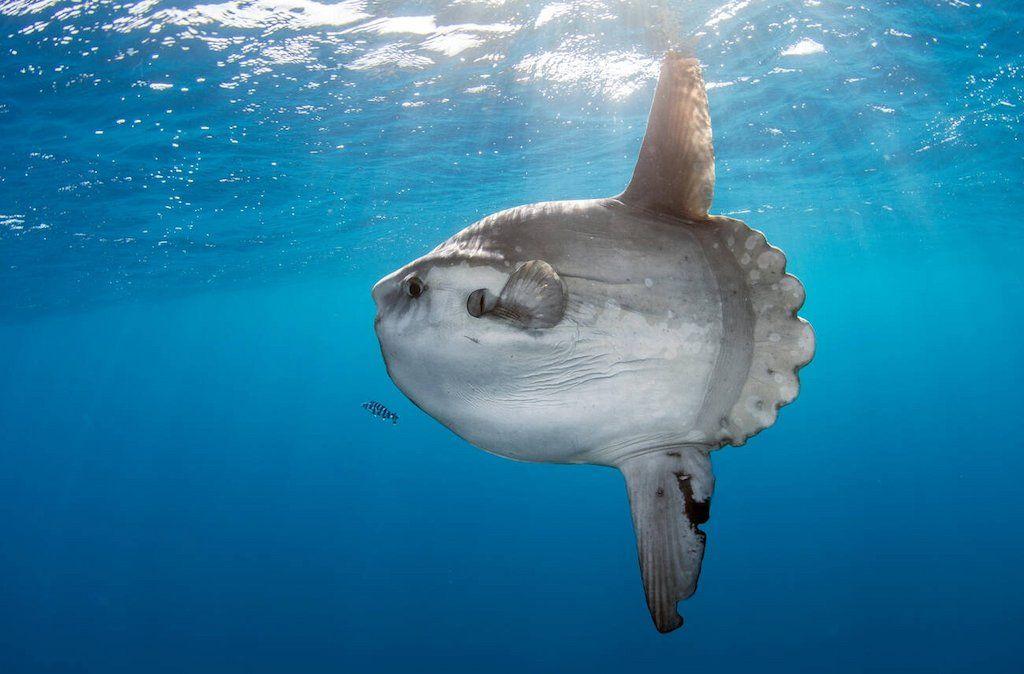
The ocean sunfish, commonly known as the mola, is one of the most unusual creatures in the sea. With its enormous flattened body, tiny mouth, and seemingly unfinished tail, this remarkable fish looks unlike almost anything else in the ocean.
Despite its strange appearance, the ocean sunfish is a highly specialized marine animal capable of traveling long distances, diving into deep waters, and growing to extraordinary sizes.
1. What is an ocean sunfish?
The Ocean sunfish (Mola mola) belongs to the family Molidae, a group of large marine fishes distinguished by their rounded bodies and unusual swimming anatomy.
| Characteristic | Details |
|---|---|
| Scientific name | Mola mola |
| Common name | Ocean sunfish |
| Family | Molidae |
| Habitat | Temperate and tropical oceans |
| Diet | Jellyfish, salps, other gelatinous animals, and various small marine organisms |
| Maximum length | Around 3.3 metres |
| Weight | Can exceed 2,000 kg |
| Lifespan | Not precisely established in the wild |
| Conservation status | Vulnerable (IUCN assessment) |
2. A body unlike any other fish


10
The ocean sunfish has an extraordinary body structure. Unlike most fish, it lacks a conventional tail fin. Instead, its body ends in a rounded structure called the clavus.
Its long dorsal and anal fins move rhythmically from side to side, propelling the fish through the water. The sunfish also has thick, rough skin and a small mouth with fused teeth forming a beak-like structure.
Although it can appear awkward, its anatomy is remarkably well adapted to its lifestyle.
3. One of the heaviest bony fishes
Ocean sunfish can reach weights exceeding two tonnes, making them among the heaviest bony fishes on Earth.
However, the closely related giant sunfish, Mola alexandrini, holds the recognized record for the heaviest bony fish, with a documented specimen weighing approximately 2,744 kilograms.
4. Why do sunfish lie on the ocean surface?


8
One of the most fascinating sunfish behaviors is floating sideways near the ocean surface.
Scientists believe this behavior serves several purposes:
- Warming up: Sunfish may absorb heat after diving into colder deep waters.
- Parasite removal: Seabirds and cleaner fish sometimes feed on parasites attached to their bodies.
- Rest and recovery: Surface basking may help them recover between dives.
Despite their name, sunfish do not depend on sunlight for energy in the way plants do.
5. An extraordinary reproductive strategy
Female ocean sunfish can produce astonishing numbers of eggs. One frequently cited estimate describes approximately 300 million eggs in a single female, although this should not be interpreted as the number released in every spawning event.
Their larvae look dramatically different from adults, with tiny bodies covered in spines. As they mature, they gradually develop the distinctive rounded shape of adult sunfish.
6. Are ocean sunfish dangerous?
Ocean sunfish are generally harmless to humans. They are not aggressive predators and usually feed on relatively small or soft-bodied marine organisms.
Their enormous size can make close encounters surprising, but divers often describe them as calm and curious-looking animals.
7. Threats and conservation
Despite their size, ocean sunfish face significant threats from human activities, particularly accidental capture in fishing gear.
Plastic pollution also presents risks, especially when floating plastic resembles gelatinous prey. Vessel collisions and marine ecosystem changes may create additional pressures.
Protecting these extraordinary animals requires sustainable fisheries, reduced marine pollution, and improved scientific monitoring.
8. Five fascinating facts

1. It swims without a normal tail.
Its dorsal and anal fins provide most of its propulsion.

2. It can dive hundreds of metres.
Sunfish regularly move between warmer surface waters and colder depths.

3. It hosts numerous parasites.
Sunfish are known to carry many species of external and internal parasites.
4. Its growth is remarkable.
Tiny larvae eventually develop into adults weighing hundreds or thousands of kilograms.

5. Its scientific name means millstone.
The name Mola comes from Latin, referring to its rounded, millstone-like appearance.
Conclusion
The ocean sunfish is a remarkable example of evolution producing an animal that seems almost impossible. Its unusual shape, immense size, extraordinary reproductive potential, and deep-diving behavior make it one of the ocean’s most fascinating inhabitants.
Understanding and protecting the mola helps preserve the biodiversity of the world’s oceans.
Suggested SEO title: Ocean Sunfish (Mola mola): Facts, Size, Habitat and Amazing Adaptations
Meta description: Discover the extraordinary ocean sunfish, or Mola mola. Explore its enormous size, unusual anatomy, diet, habitat, reproduction and fascinating behavior.