
Views: 13
BIN3AIAH FISHES • MARINE LIFE • SPECIES FEATURE
Manta Ray: The Gentle Giant of the Ocean


11
Graceful, intelligent, and breathtakingly beautiful, manta rays are among the ocean’s most extraordinary creatures. With enormous wing-like fins and a peaceful nature, these gentle giants glide through the sea like birds flying through the sky.
Meet the magnificent manta ray
Imagine diving into crystal-clear tropical waters and suddenly seeing an enormous dark silhouette approaching. Its wings stretch several metres across, yet its movement is effortlessly graceful. This is the manta ray, one of the largest and most fascinating fish on Earth.
Despite their impressive size, manta rays are not aggressive toward humans. Unlike stingrays equipped with venomous tail spines, manta rays have no venomous stinger. They feed primarily on tiny plankton rather than large prey.
Manta rays belong to the same broad group of cartilaginous fish as sharks and other rays. Their skeletons are made of cartilage rather than bone.
Manta ray facts at a glance
Scientific genus
Mobula
Diet
Zooplankton
Giant manta wingspan
Up to ~8 m
Lifespan
45+ years possible
Habitat
Tropical and temperate seas
Reproduction
Usually one pup
Values primarily describe the giant oceanic manta ray; size and life history vary by species.
NOAA Fisheries
+1
Two remarkable manta ray species

1. Giant oceanic manta ray (Mobula birostris)
The largest ray species, capable of growing to nearly eight metres across. It travels through open-ocean habitats and visits nutrient-rich waters to feed.
Its conservation status is Endangered on the IUCN Red List.
Manta Trust
+1

2. Reef manta ray (Mobula alfredi)
Generally smaller than its oceanic relative, the reef manta often inhabits coastal reefs and returns to feeding and cleaning locations.
It is frequently encountered around tropical islands and coral reefs.
How manta rays feed
One of the most surprising facts about manta rays is that these enormous fish survive on some of the ocean’s smallest creatures.
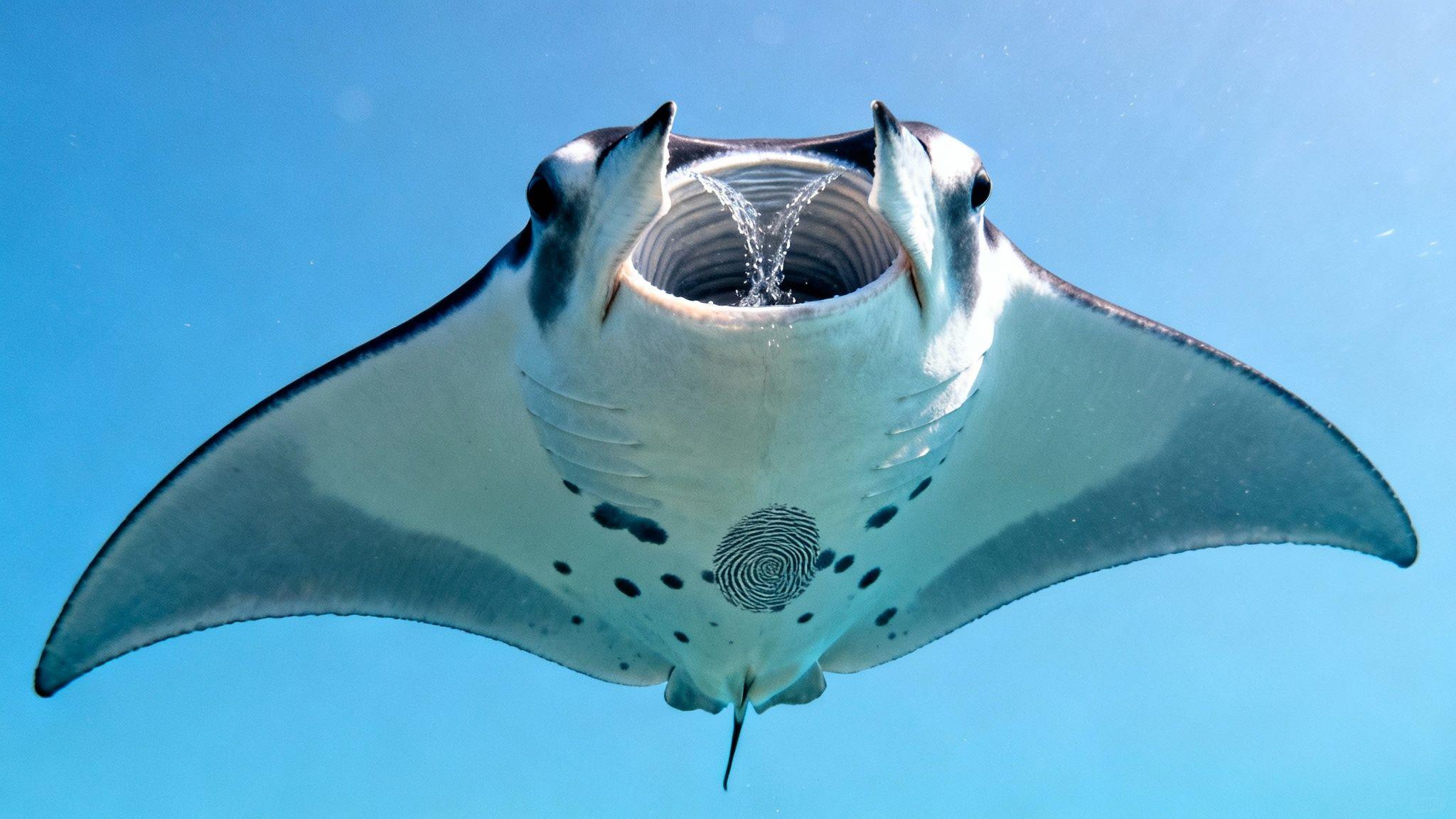
When feeding, a manta ray opens its large mouth and uses two specialised fins near its head, called cephalic fins, to guide plankton-rich water inside. Filtering structures associated with its gills trap the food while seawater passes through.
Mantas sometimes perform spectacular barrel rolls and loop repeatedly through concentrated plankton patches, efficiently collecting food as they swim.
Discover Fishes
+1
Intelligence and fascinating behaviour
Manta rays are known for their relatively large brains, complex movement patterns, and social interactions.
Researchers have observed manta rays gathering at feeding grounds and cleaning stations, where smaller fish remove parasites and dead skin from their bodies.
Perhaps their most intriguing feature is their individual identity: unique spot patterns on the underside of each manta ray allow scientists to recognise and track individuals through photographs.
This technique helps researchers study migrations, survival, and population changes without physically tagging every animal.
Great Barrier Reef Foundation
+1


9
Where do manta rays live?
Manta rays inhabit warm and temperate oceans worldwide. They can be found around tropical islands, coral reefs, offshore seamounts, and productive coastal waters.
Famous places for manta encounters include the Maldives, Indonesia, Hawaii, Mozambique, and the Galápagos Islands.
Oceanic mantas may travel long distances and dive hundreds of metres below the surface in search of food, while reef mantas often show stronger connections to particular coastal locations.
NOAA Fisheries
+1
Reproduction: why every manta ray matters
Manta rays reproduce slowly compared with many other fish. Females typically give birth to a single fully developed pup after a pregnancy of approximately one year, and several years may pass between births.
This slow reproductive rate makes manta populations especially vulnerable to excessive fishing. If many adults are removed from a population, recovery can take a very long time.
NOAA Fisheries
+1
Threats and conservation
Despite their size, manta rays face serious threats from human activity. Targeted fishing, accidental capture in fishing nets, marine pollution, and vessel collisions can all affect their survival.
The giant oceanic manta is classified as Endangered globally by the IUCN, while it is legally classified as Threatened under the United States Endangered Species Act. These are two different conservation assessment systems.
NOAA Fisheries
+1
Protecting manta rays requires better fisheries management, habitat conservation, reduced marine debris, and responsible wildlife tourism.
When swimming or diving with mantas, observers should maintain respectful distances, avoid touching or chasing them, and allow the animals to control the encounter.
Conclusion: guardians of the blue
Manta rays remind us that extraordinary size does not always mean aggression. These peaceful filter feeders are essential members of marine ecosystems and powerful ambassadors for ocean conservation.
Protecting them means preserving some of the ocean’s most impressive wildlife for generations to come.
Publisher package — Bin3aiah Fishes
FISHES-004 — Manta Ray
Article ready
Suggested website: fishes.bin3aiah.net
SEO title: Manta Ray: The Gentle Giant of the Ocean | Facts & Conservation
URL slug: manta-ray-gentle-giant-ocean
Meta description: Discover the fascinating world of manta rays, including their giant wingspan, intelligence, feeding habits, habitats and conservation challenges.
Focus keyword: Manta Ray
Secondary keywords: Giant Manta Ray, Reef Manta Ray, Oceanic Manta Ray, Manta Ray Facts, Marine Wildlife
Category: Marine Life / Rays
Tags: Manta Ray, Ocean Wildlife, Marine Conservation, Ocean Giants, Mobula
Photo gallery resources


15
For the publisher’s 10-image gallery, use the original image collections on Wikimedia Commons — Oceanic Mantas and Wikimedia Commons — Reef Mantas. These contain dozens of real wildlife photographs. Check the individual image license, photographer credit, and species identification before publishing.
Suggested featured image: A full-body giant manta ray swimming through clear blue water, with both wings visible.
Video resources
Three video topics to include: manta rays filter-feeding, underwater cleaning stations, and giant manta encounters with divers.
A located video is Manta Ray Cleaning Stations!. The remaining two video embeds still need verified source selection.
Scientific references
Primary research sources include NOAA Fisheries, Manta Trust, and Great Barrier Reef Foundation.
Publication status: Article text and SEO metadata prepared. The 10 individually licensed gallery images, three video embeds, and WordPress upload have not been completed; the article is not published.