


Views: 0
BIN3AIAH FISHES • MARINE LIFE • SPECIES GUIDE
Whale Shark: The World’s Largest Living Fish


Discover the extraordinary whale shark, a gentle ocean giant that can grow longer than a bus, survives by filtering tiny marine creatures, and travels across vast stretches of the world’s oceans.
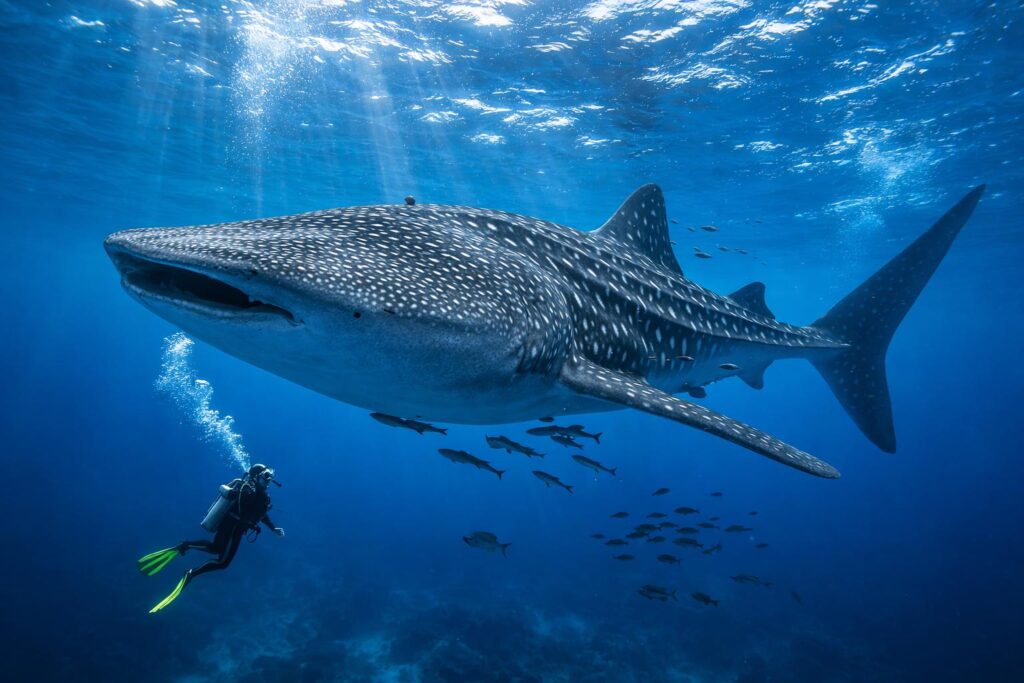
Despite its enormous size and intimidating name, the whale shark (Rhincodon typus) is not a whale and is not normally dangerous to humans. It is a shark, the largest living species of fish on Earth, and one of the ocean’s most remarkable animals.
With its broad head, enormous mouth, and beautiful pattern of white spots, the whale shark is instantly recognizable. Yet much about its life remains mysterious, especially its reproduction, movements in the deep ocean, and longevity.
National Ocean Service
+2
Whale Shark: Quick Facts
Scientific name
Rhincodon typus
Animal group
Cartilaginous fish
Largest confirmed length
18.8 metres
Diet
Plankton and small marine animals
Habitat
Tropical and warm-temperate oceans
Conservation status
Endangered
Sources: NOAA, US Bureau of Ocean Energy Management, IUCN and Convention on Migratory Species.
1. How Big Is a Whale Shark?
The whale shark holds the record for the largest living fish. Many adults reach approximately 10–12 metres, while exceptional individuals can grow significantly larger.
The largest confirmed individual measured around 18.8 metres. That is longer than many passenger buses and comparable to a large articulated vehicle. Its enormous mouth, thick body, and broad tail give it a truly impressive presence underwater.
Unlike whales, which breathe air using lungs, whale sharks extract oxygen from water through their gills. They also have skeletons made primarily of cartilage rather than bone.

Bureau of Ocean Energy Management
+1
2. What Do Whale Sharks Eat?


9
One of the greatest surprises about the world’s largest fish is its diet.
Instead of hunting seals or large fish, whale sharks mostly eat tiny organisms, including zooplankton, fish eggs, larvae, small schooling fish, and small squid.
They feed using a specialized process called filter feeding. A whale shark draws water into its large mouth, filters food particles using structures inside its throat and gill region, and releases the water through its gills.
Whale sharks can feed while swimming forward or by using suction to draw concentrated prey into their mouths.
Woods Hole Oceanographic Institution
+1
3. Where Do Whale Sharks Live?
Whale sharks travel through tropical and warm-temperate seas worldwide. They can be encountered in both coastal waters and the open ocean, frequently visiting places with abundant plankton or seasonal fish spawning.
Notable gathering areas include Ningaloo Reef in Western Australia, Mexico’s Yucatán region, the Maldives, the waters around Djibouti, and parts of the Arabian Gulf.
They are highly migratory, crossing international boundaries and travelling vast distances in search of food.
New Zealand Department of Conservation
+1
4. Every Whale Shark Has a Unique Pattern


9
The white spots and pale stripes across a whale shark’s dark skin are more than beautiful markings.
Each animal has a distinctive pattern, similar in principle to a human fingerprint. Scientists can photograph these markings and use pattern-recognition software to identify individuals.
Repeated sightings help researchers understand migration routes, population trends, and how frequently whale sharks return to particular feeding grounds.

EAD
+1
5. How Long Do Whale Sharks Live?
Whale sharks grow slowly and are believed to live for many decades. Estimates commonly place their lifespan around 70–100 years, although the exact maximum remains uncertain.
They also mature relatively late, making them particularly vulnerable to human-caused mortality. When individuals are killed before reaching reproductive age, replacing them can take many years.
National Ocean Service
+1
6. Are Whale Sharks Dangerous?
Whale sharks are generally peaceful toward humans and are not known as aggressive predators of people.
However, they remain enormous wild animals. Their powerful tails and large bodies can accidentally injure swimmers who get too close.
Responsible encounters require maintaining distance, avoiding physical contact, never blocking their swimming path, and following local wildlife regulations.
7. Why Are Whale Sharks Endangered?
The whale shark is classified as Endangered on the IUCN Red List.
Its survival is threatened by fishing, accidental capture in fishing gear, collisions with vessels, marine pollution, and habitat changes.
Protection requires international cooperation because these sharks routinely travel through the waters of multiple countries.
DOI
+2
8. Whale Sharks in the United Arab Emirates
Whale sharks also occur in UAE waters, making them especially relevant to marine conservation in the Arabian Gulf.
The Environment Agency – Abu Dhabi monitors whale shark sightings and advises the public not to disturb or harm these animals. Whale shark fishing is prohibited throughout the year in the UAE.
The agency also highlights the importance of their unique body markings for identifying individuals.
EAD
9. Interesting Whale Shark Facts
- Despite its name, a whale shark is a fish, not a marine mammal.
- Its massive mouth is designed to collect small prey rather than bite large animals.
- Its spotted skin pattern can help researchers recognize individual animals.
- Whale sharks sometimes gather in large numbers where seasonal feeding conditions are especially favorable.
- They can dive into deep ocean waters as well as swim near the surface.
- They are among the longest-lived and latest-maturing fish species.
10. Why Whale Sharks Matter
Whale sharks are important members of marine ecosystems and offer researchers valuable clues about ocean productivity, plankton availability, and the health of marine habitats.
Protecting them also helps encourage responsible wildlife tourism and raises awareness about threats facing sharks and other migratory marine animals.
The whale shark demonstrates something extraordinary about ocean life: the largest living fish survives not by hunting enormous prey, but largely by feeding on some of the smallest creatures in the sea.
Saving this gentle giant is part of protecting the wider ocean ecosystem for future generations.
Media package for Bin3aiah Fishes
Recommended real-world photography and educational videos for the WordPress publisher.
Photo gallery sources


1. Whale shark in open waterNOAA image source


2. Ningaloo ReefPhoto source

3. Feeding behaviorPhoto source


4. Arabian Sea whale sharkPhoto source
For the full gallery of at least 10 photographs, the publisher can select additional images from the Wikimedia Commons whale shark collection. Check the licence, author credit and attribution conditions on each individual file page before reuse. The image previews above are visual references, not confirmation of reuse rights.
Three recommended videos

Whale Shark | National Geographic
Documentary explaining the feeding behavior of the giant fish.

Whale sharks interacting with other marine wildlife.


A Day in the Life of a Whale Shark | Nat Geo Kids
Accessible educational introduction to whale shark biology and daily life.
Use official YouTube embeds where embedding is permitted; do not reupload the videos without permission.
SEO and WordPress publishing details
Post title
Whale Shark: The World’s Largest Living Fish
SEO title
Whale Shark Facts: Size, Diet, Habitat & Conservation
Slug
whale-shark-worlds-largest-living-fish
Focus keyword
whale shark
Secondary keywords
whale shark facts, Rhincodon typus, largest fish, whale shark diet, whale shark UAE
Meta description
Discover whale shark facts, including their remarkable size, filter-feeding diet, ocean habitats, unique markings and endangered status.
Category
Marine Life / Sharks
Tags
Whale Shark, Sharks, Ocean Wildlife, Marine Biology, Endangered Species, UAE Marine Life
Featured-image ALT
A spotted whale shark swimming underwater, the world’s largest living fish
Suggested status
Ready for publisher review
Copy all SEO details
Publisher destination: fishes.bin3aiah.net
Status: Article drafted, facts researched, SEO prepared, and media sources identified. The post has not been uploaded or published, and the full 10-photo gallery still requires individual licence verification.