


Views: 0
Mandarinfish: One of the Ocean’s Most Colorful Fish
BIN3AIAH FISHES | Marine Life • Tropical Fish • Ocean Wonders


11
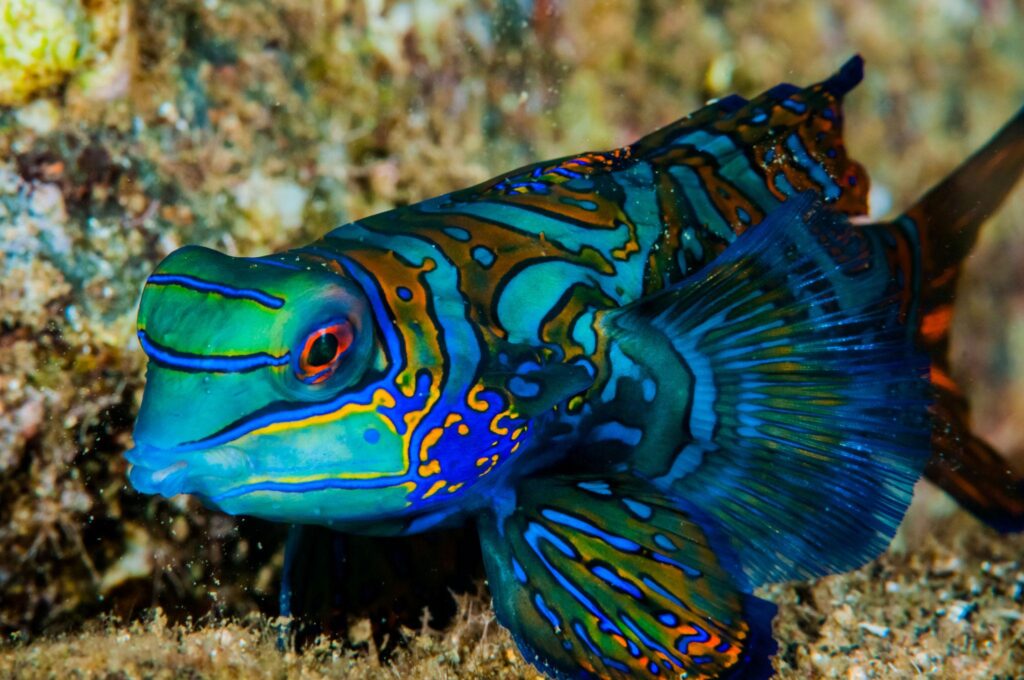
Among the thousands of fish species inhabiting our oceans, few can compete with the extraordinary beauty of the mandarinfish (Synchiropus splendidus). With its electric-blue patterns, brilliant orange swirls, and vivid green markings, this tiny tropical fish looks almost like a living work of art.
Despite its spectacular appearance, the mandarinfish is a shy, bottom-dwelling creature that spends much of its life exploring coral reefs in search of tiny animals to eat.
Its unusual coloration, fascinating courtship rituals, and specialized feeding habits make it one of the most remarkable inhabitants of the Indo-Pacific.
Mandarinfish quick facts
| Scientific name | Synchiropus splendidus |
| Family | Callionymidae (dragonets) |
| Maximum length | Approximately 7 cm |
| Distribution | Western Pacific Ocean |
| Habitat | Coral reefs and protected lagoons |
| Typical recorded depth | 1–18 metres |
| Diet | Tiny crustaceans, worms, and other invertebrates |
| Conservation status | Least Concern (IUCN assessment, 2018) |
Sources: FishBase and Aquarium of the Pacific.
FishBase
+1
1. Why are mandarinfish so colorful?
The mandarinfish is famous for its elaborate combinations of blue, green, orange, and yellow. Unlike the relatively simple markings of many reef fish, its body displays swirling lines and irregular patches that create an almost psychedelic appearance.
Its exceptional blue coloration is associated with specialized pigment cells. The patterns may also help members of the species recognize one another.
What makes the fish especially interesting is that its bright colors coexist with a defensive adaptation: instead of protective scales, the mandarinfish has a mucus-covered body. The mucus is unpleasant to potential predators and may help discourage attacks.

Animal Diversity Web
+1
2. Where do mandarinfish live?


7
Mandarinfish inhabit warm waters of the western Pacific, from southern Japan toward Australia, including reefs around Indonesia, the Philippines, and other tropical islands.
They prefer protected lagoons, shallow inshore reefs, and complex areas of coral rubble. These environments provide both shelter and a constant supply of tiny prey.
Rather than swimming continuously in open water, they spend much of their time close to the seabed, moving between rocks and corals.
FishBase
+1
3. What do mandarinfish eat?
Mandarinfish are specialized hunters of very small marine animals. Their natural diet includes copepods, amphipods, tiny worms, and other bottom-dwelling invertebrates.
They use their small mouths to pick food from the reef surface and among coral fragments.
This feeding behavior is particularly important for aquarium enthusiasts. Although mandarinfish are beautiful, they can be difficult to keep healthy without a reliable supply of suitable live food.
Animal Diversity Web
4. The extraordinary mating dance


One of the most fascinating aspects of mandarinfish behavior is their courtship ritual.
During spawning, a male and female may rise together above the reef, swimming closely in a synchronized upward movement. As they ascend, eggs and sperm are released into the water, where fertilization takes place.
Males can be distinguished partly by their more elongated dorsal-fin spine, which forms an eye-catching feature during courtship.
FishBase
+1
5. Can mandarinfish live in home aquariums?
They can, but they are not ideal beginner fish.
Their specialized diet presents the greatest challenge. An established reef aquarium with a thriving population of small live invertebrates is important, and even an apparently healthy fish can gradually lose weight if food is insufficient.
Captive-bred individuals that reliably accept appropriate prepared foods may be preferable to wild-caught specimens. However, aquarists still need to monitor feeding and body condition carefully.
6. Conservation and threats
The mandarinfish is currently classified as Least Concern based on its 2018 IUCN assessment, as reported by FishBase. This does not mean it faces no environmental pressures.
Coral reef degradation and poorly managed collection for the aquarium trade are relevant concerns. Maintaining healthy reef ecosystems and supporting responsible aquarium practices can help protect these colorful fish and the broader communities they inhabit.
FishBase
+1
7. Five fascinating mandarinfish facts
- Despite sometimes being called the mandarin goby, it is a dragonet rather than a true goby.
- Its body lacks conventional scales and is protected by mucus.
- Males generally have a more prominent elongated dorsal-fin spine.
- It spends much of its life close to the reef bottom rather than in open water.
- Its remarkable colors have made it a favorite subject of underwater photographers.
Conclusion
The mandarinfish demonstrates that some of the ocean’s greatest wonders come in remarkably small packages. Its vivid patterns, unusual defenses, delicate movements, and elaborate courtship make it far more than just another colorful reef fish.
Protecting coral reef habitats ensures that future generations can continue to encounter these extraordinary marine creatures in the wild.
Website publishing package
SEO details
Content ready
Suggested website: fishes.bin3aiah.net
| Field | Recommended value |
|---|---|
| Post title | Mandarinfish: One of the Ocean’s Most Colorful Fish |
| URL slug | mandarinfish-colorful-ocean-fish |
| Focus keyword | Mandarinfish |
| Secondary keywords | Mandarin dragonet, Synchiropus splendidus, colorful reef fish |
| Category | Marine Fish |
| Tags | Mandarinfish, Coral Reef, Tropical Fish, Marine Biology, Pacific Ocean |
SEO meta description
Discover the colorful mandarinfish, its coral reef habitat, unusual diet, beautiful mating dance, and conservation status.
Recommended photo gallery


01 — Detailed portrait

02 — Full body


03 — Colorful fins


04 — Natural habitat
05 — Reef-bottom behavior


06 — Head and eyes


07 — Pair and courtship

08 — Reef exploration


09 — Color variation


10 — Intricate markings
Photo references for selection, not cleared publication assets. Verify licensing and attribution before uploading.
Recommended videos
- Mandarinfish courtship and mating dance
- Mandarinfish hunting and feeding
- Mandarinfish in its natural coral reef habitat
These are video discovery links, not yet verified individual embeds.
Scientific references: Aquarium of the Pacific, Georgia Aquarium, and FishBase.
Publishing status: Article and SEO recommendations prepared. Images, video rights, and live WordPress publication have not been completed.