
Views: 0
Leafy Seadragon: The Ocean’s Master of Camouflage

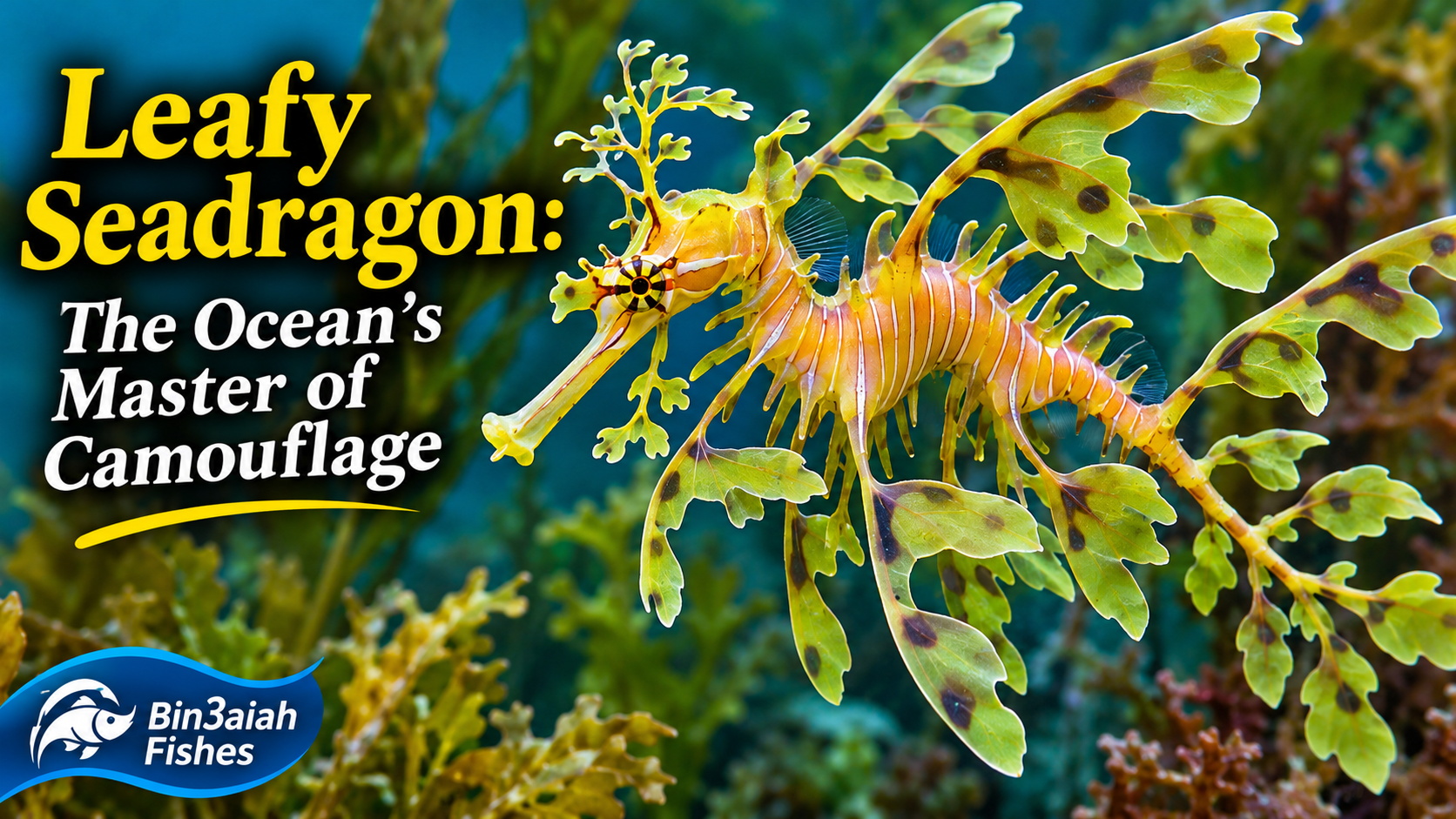
The leafy seadragon (Phycodurus eques) is one of the most extraordinary creatures in the ocean. With delicate, leaf-shaped appendages covering its body, this unusual fish resembles drifting seaweed rather than a living animal.
Native to the temperate coastal waters of southern Australia, the leafy seadragon belongs to the same family as seahorses and pipefish. Its remarkable appearance, slow movements, and unusual reproductive behavior make it one of the most fascinating examples of marine adaptation.
Leafy Seadragon Quick Facts
| Scientific Name | Phycodurus eques |
|---|---|
| Family | Syngnathidae |
| Animal Type | Marine fish |
| Distribution | Southern Australia |
| Maximum Length | Approximately 35 cm |
| Habitat | Kelp forests, rocky reefs, and seagrass beds |
| Diet | Small crustaceans, especially mysid shrimp |
| Movement | Small, nearly transparent fins |
| Reproduction | Males carry eggs beneath their tails |
| Special Adaptation | Leaf-shaped camouflage |
How Does the Leafy Seadragon Camouflage Itself?
The leafy seadragon’s most impressive characteristic is its extraordinary camouflage. Its body is covered in elaborate, leaf-like appendages that resemble floating marine vegetation.
These structures are not primarily used for swimming. Instead, they help break up the fish’s outline, making it difficult for predators to distinguish the animal from surrounding seaweed.
Its yellow, green, and brown coloration further enhances its disguise, particularly in habitats containing kelp and other marine algae.

How Does It Swim?
Despite its elaborate appearance, the leafy seadragon is a relatively slow swimmer.
It moves using a small dorsal fin along its back and pectoral fins near its head. These fins are nearly transparent and move rapidly, creating gentle propulsion.
The resulting movement gives the impression that the seadragon is simply drifting through the water like a piece of seaweed.
Where Do Leafy Seadragons Live?
Leafy seadragons are endemic to southern Australia, meaning they occur naturally nowhere else in the world.
They inhabit temperate coastal environments, particularly:
- Kelp forests and seaweed-covered reefs
- Seagrass meadows
- Rocky coastal habitats
- Nearby sandy areas with suitable shelter
They occur around parts of South Australia, southern Western Australia, and western Victoria.
These coastal environments supply food, shelter, and vegetation that helps the seadragon remain hidden.
What Do Leafy Seadragons Eat?
Although their appearance is delicate, leafy seadragons are carnivorous predators.
Their diet consists mainly of small marine animals, particularly mysid shrimp and other tiny crustaceans.
Rather than pursuing prey at high speed, the leafy seadragon approaches slowly and uses its long, tubular snout to draw food into its mouth through suction.
Its camouflage makes this hunting strategy especially effective because small animals may not recognize the seadragon as a predator.
Reproduction: Why Do Male Leafy Seadragons Carry Eggs?
One of the most fascinating characteristics of leafy seadragons is their unusual reproductive system.
Unlike many other fish species, males play a major role in carrying developing eggs.
The Breeding Process
- During courtship, a male and female perform coordinated movements.
- The female transfers eggs onto a specialized brood patch beneath the male’s tail.
- The male fertilizes and carries the attached eggs while they develop.
- After several weeks, the young seadragons hatch.
- The hatchlings become independent immediately and must find their own food.
Unlike seahorses, which generally carry eggs inside a brood pouch, leafy seadragons carry their developing eggs externally on the underside of their tails.
A male may carry more than 100 eggs during a breeding cycle.
Leafy Seadragon vs. Seahorse: What’s the Difference?
Leafy seadragons and seahorses are close relatives, but several characteristics distinguish them.
| Feature | Leafy Seadragon | Seahorse |
|---|---|---|
| Appearance | Elaborate leaf-like appendages | Horse-shaped head and curled body |
| Tail | Not prehensile | Usually prehensile |
| Swimming | Slow, gentle gliding | Slow movement using small fins |
| Egg Carrying | Exposed brood patch beneath the tail | Enclosed male brood pouch |
| Camouflage | Resembles seaweed | Varies by species and habitat |
Why Are Leafy Seadragons Vulnerable?
Although their camouflage provides protection against predators, leafy seadragons remain sensitive to environmental changes.
Important threats include:
- Habitat degradation: Damage to kelp forests and seagrass beds reduces shelter and feeding opportunities.
- Coastal pollution: Poor water quality can affect marine ecosystems.
- Climate change: Ocean warming can alter the habitats on which these fish depend.
- Illegal collection: Removing seadragons from the wild can harm local populations.
Leafy seadragons are protected in Australia. Conservation efforts focus on maintaining healthy coastal ecosystems and reducing human disturbance.

10 Fascinating Facts About Leafy Seadragons
- Leafy seadragons are real fish, not mythical creatures.
- They belong to the same family as seahorses and pipefish.
- Their leaf-like appendages mainly provide camouflage.
- They swim using small, nearly transparent fins.
- They are found naturally only in southern Australian waters.
- They can reach approximately 35 centimeters in length.
- They feed primarily on small crustaceans.
- Males carry developing eggs beneath their tails.
- The young are independent shortly after hatching.
- The species is the official marine emblem of South Australia.
Frequently Asked Questions
Are leafy seadragons dangerous?
No. Leafy seadragons are not dangerous to humans. They are small, slow-moving fish that feed mainly on tiny crustaceans.
Can leafy seadragons change color?
Leafy seadragons show natural color variation, and their appearance can vary with factors such as age and environment. However, they do not perform rapid color changes like some cephalopods.
How long do leafy seadragons live?
Leafy seadragons are estimated to live for approximately five to ten years, although lifespan varies according to environmental conditions.
Can leafy seadragons be kept as pets?
They are protected animals with specialized habitat and feeding requirements. Wild collection is restricted, and they are unsuitable for ordinary home aquariums.
Why are they called leafy seadragons?
The name comes from their unusual appearance. Their elongated bodies and elaborate leaf-shaped structures resemble a mythical dragon decorated with seaweed.
Conclusion
The leafy seadragon is one of nature’s most remarkable examples of underwater camouflage. Its leaf-shaped appendages, delicate movements, specialized feeding behavior, and unusual reproduction reveal the extraordinary diversity of marine life.
By protecting Australia’s kelp forests, seagrass meadows, and rocky coastal habitats, conservation efforts can help preserve this extraordinary species for future generations.
Explore more fascinating marine species and discover the incredible diversity of underwater life at Bin3aiah Fishes.